|
|
|
|
|
|
|
|
|
|
Ron Reznick
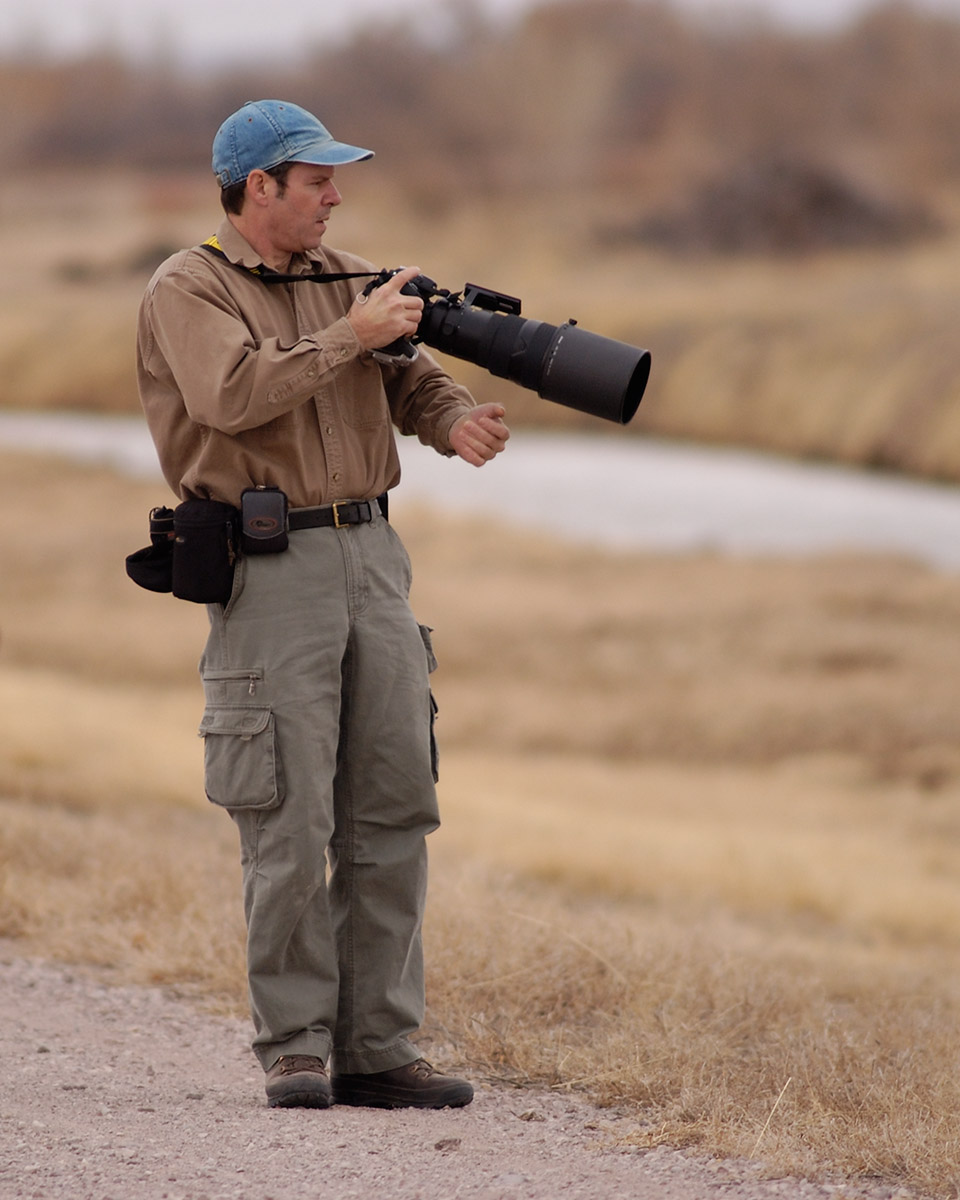
A 5-time All-American gymnast in college, Ron Reznick spent nearly 25 years after college designing and building a number of loudspeakers, acoustical devices, etc. (trapagon.com). As the computer revolution ramped up, he began designing and building high-grade computers for graphics professionals and photographers. An enthusiastic early adopter of the first Nikon D1 professional dSLR camera in 1999, he trained himself to plan, shoot and process images, taking well over 100,000 shots the first year (Nikon kept that camera to test the shutter, giving him a new camera body in exchange). Photographers began to be interested in the techniques he taught himself for image acquisition and processing, so he began training others in 2003. Ron has trained nearly 2000 photographers, written two books and made 5 videos.
|
|
Preferring to work with small groups of 5 to 9 photographers, I taught folks planning and compositional techniques, how to evaluate a scene for luminosity and rapidly set the camera to achieve the correct exposure, how to rapidly evaluate a scene for composition, depth of field requirements, etc. and the most efficient methods of working with the camera and lenses.
I also taught the entire procedure for processing images in a very rapid and consistent manner to achieve the best results with regards to color, saturation, detail, and the other factors which allow the photographer to draw the most from an image.
|
|
|
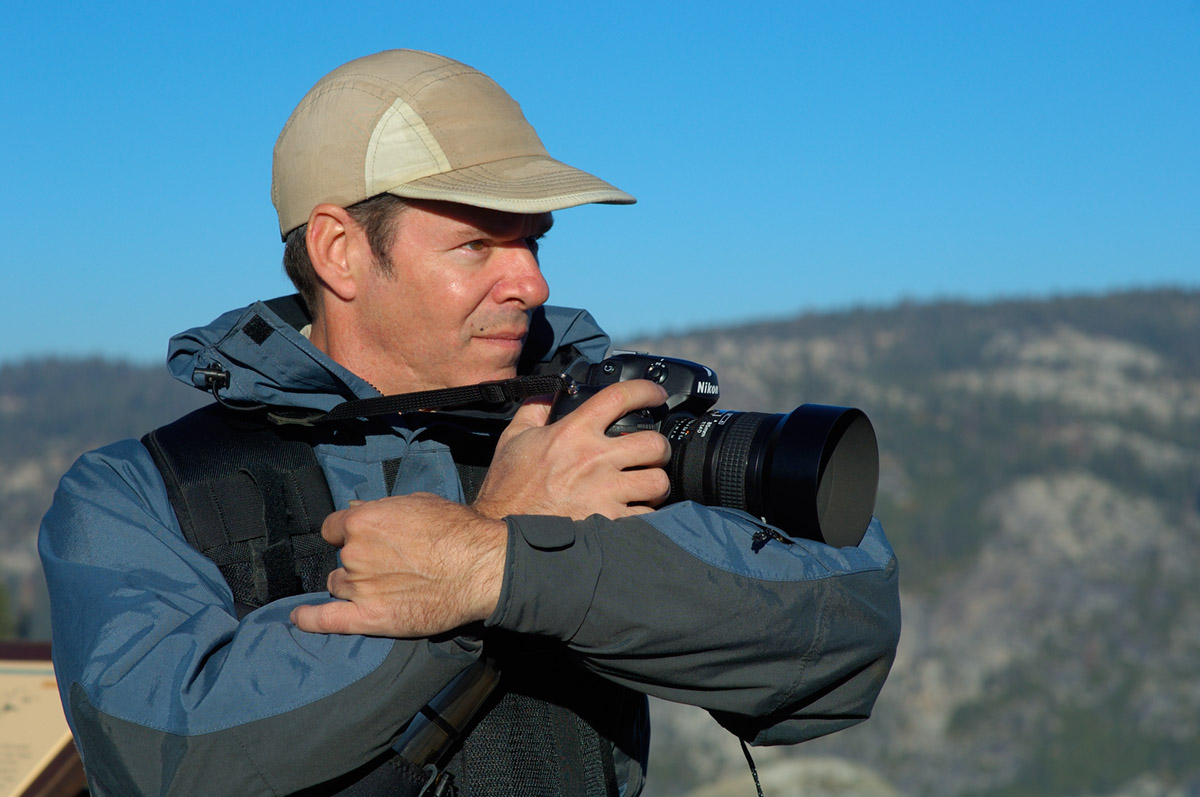
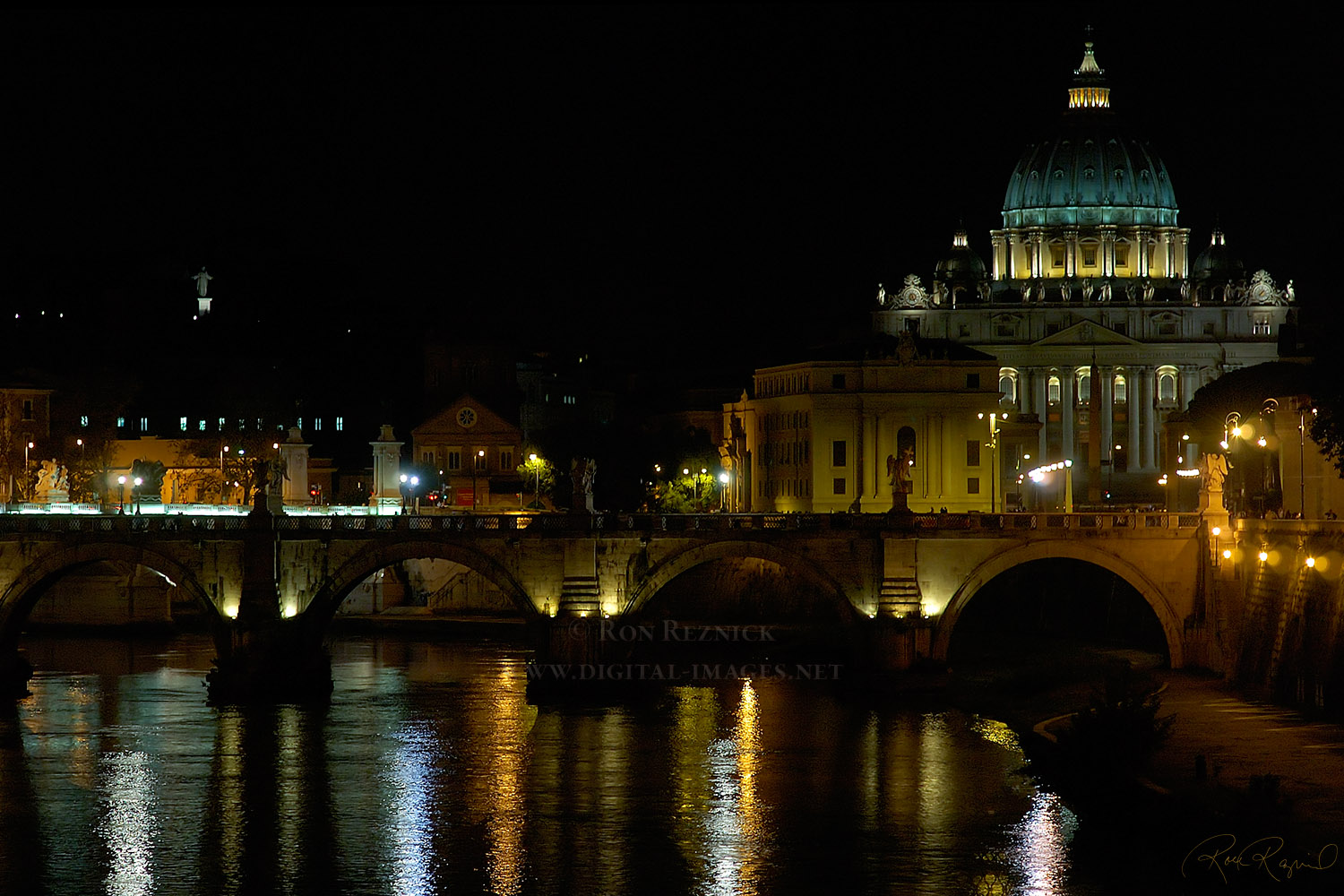
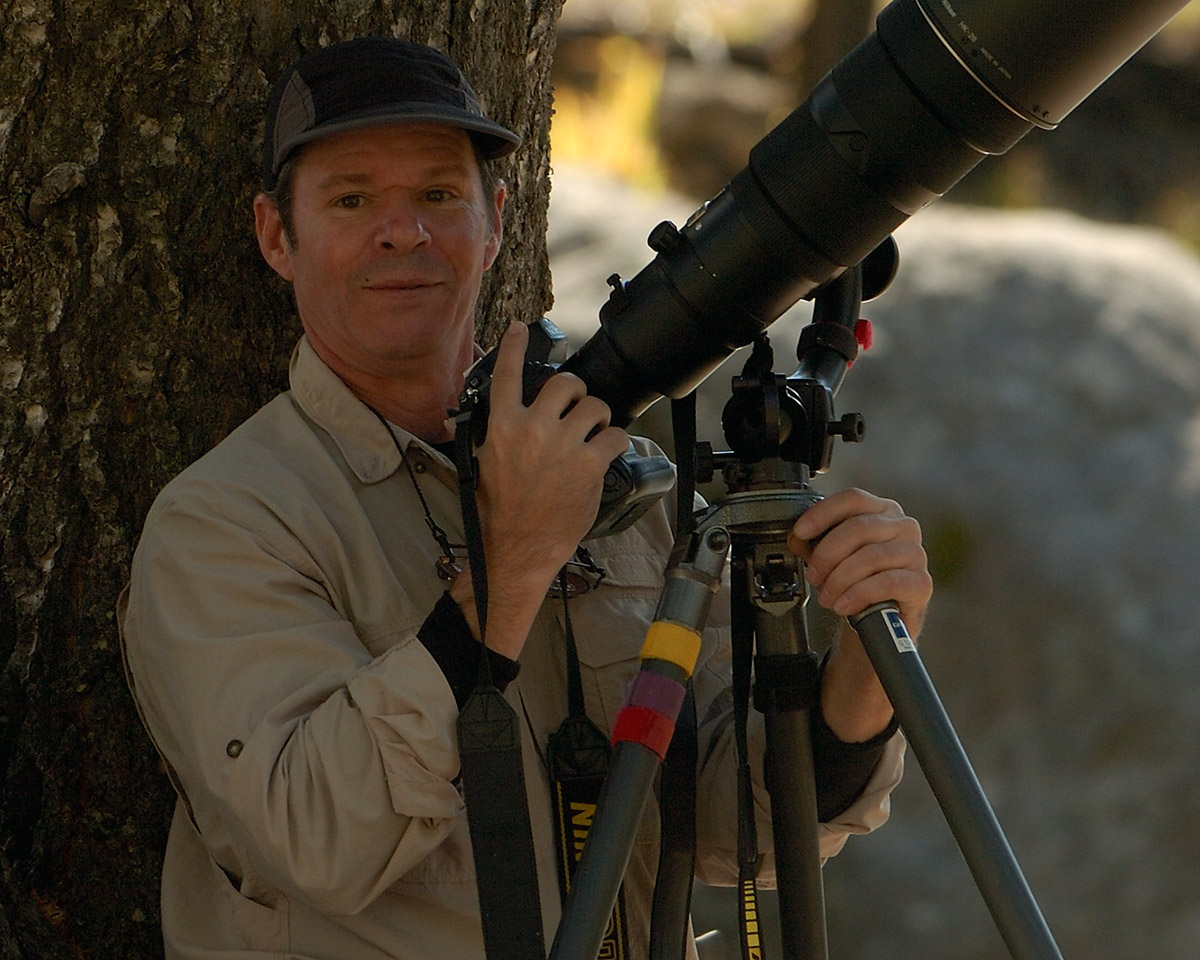
I developed an extremely stable hand-holding technique by practicing in dark museums, where tripods are not allowed but only perfect results are usable. While this hold is less often necessary when shooting in daylight as shown below, it allows you to achieve excellent results at night or when you are shooting in dark interiors (an example is the 1/6 second night image of St. Peter’s Basilica shown further below. As tripods were not allowed in churches (and on many streets in Europe) I did not take one. This technique made all the difference.
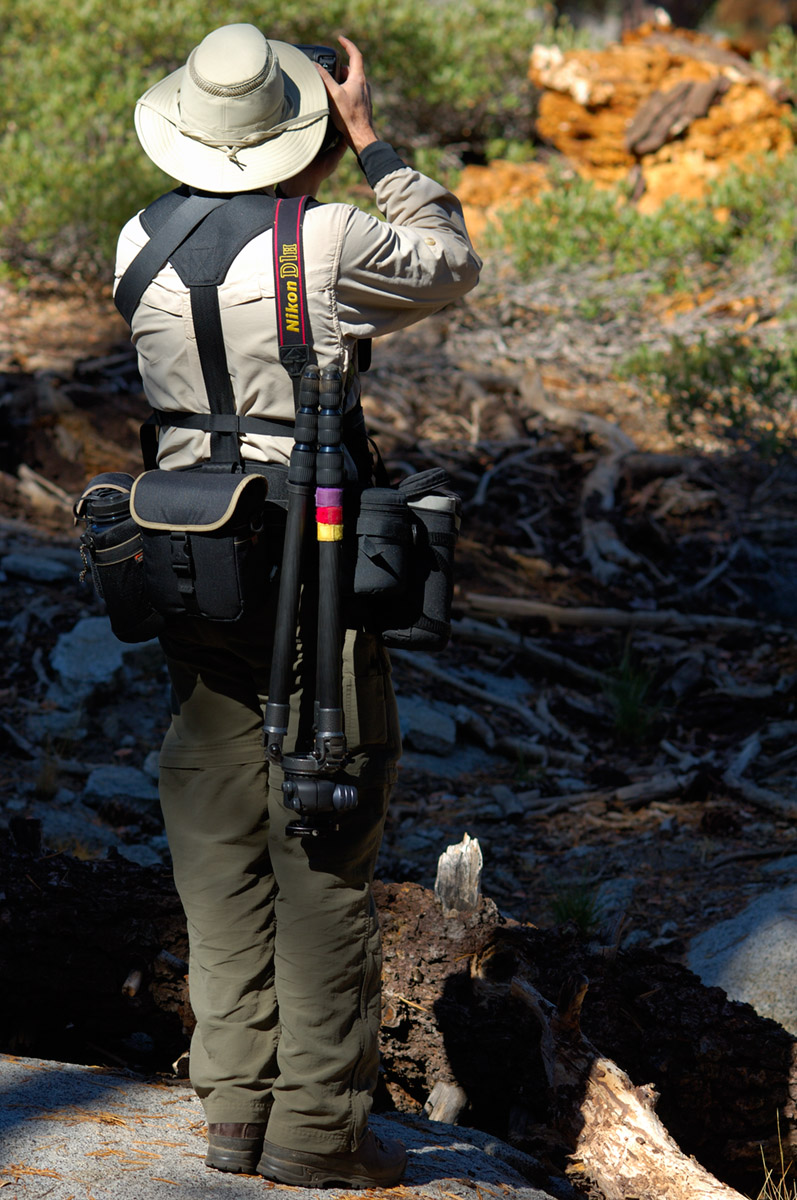
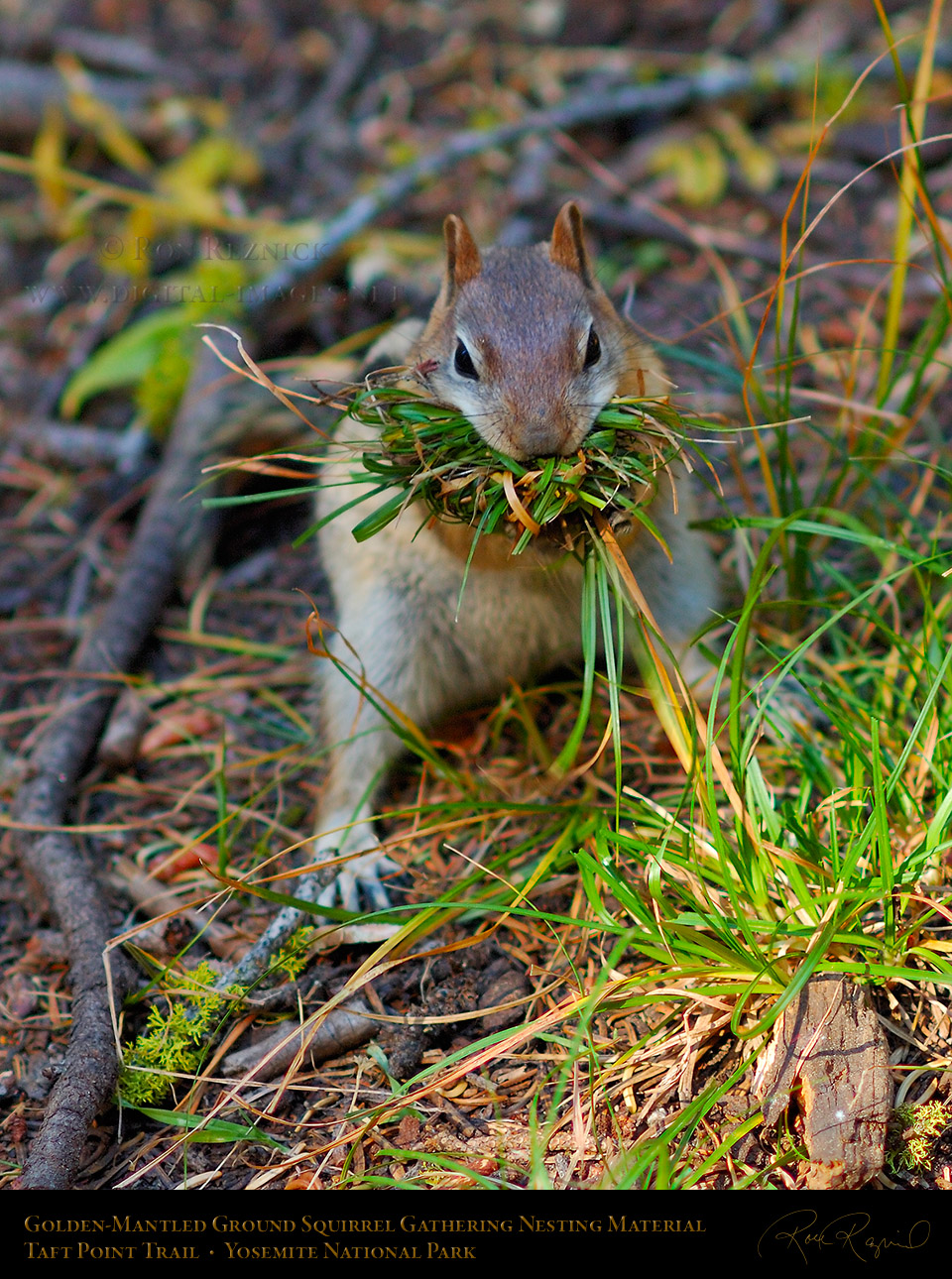
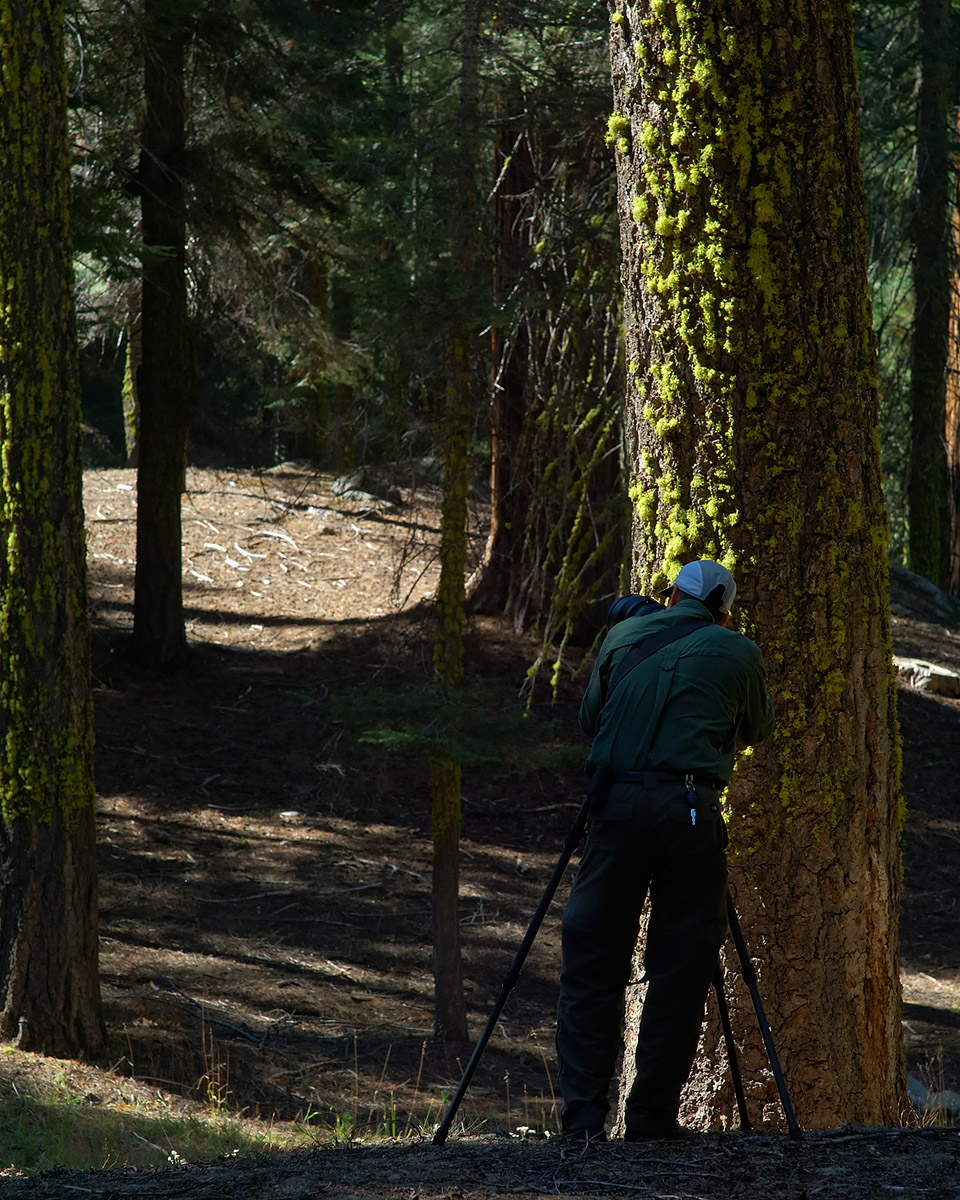
The image shown at right proves that a photographer must be part pack mule. It’s amazing how much we carry with us. If you are wondering what I was shooting, see the image below.
|
|
|
|
The image to the left didn’t require the bracing technique as much as many others I could show, but that was one of those moments where you get one chance to get a clean shot, and reducing the possibility of a blurry result caused by excessive camera movement means that you can concentrate on getting the exposure right the first time, while trying hard not to laugh.
The image below is an entirely different matter. This is the one which was mentioned above, taken at 1/6 second, hand-held at night with the 85mm. Normally an impossible shot... and a low yield even with this technique (I took several to be sure).
|
|
|
|
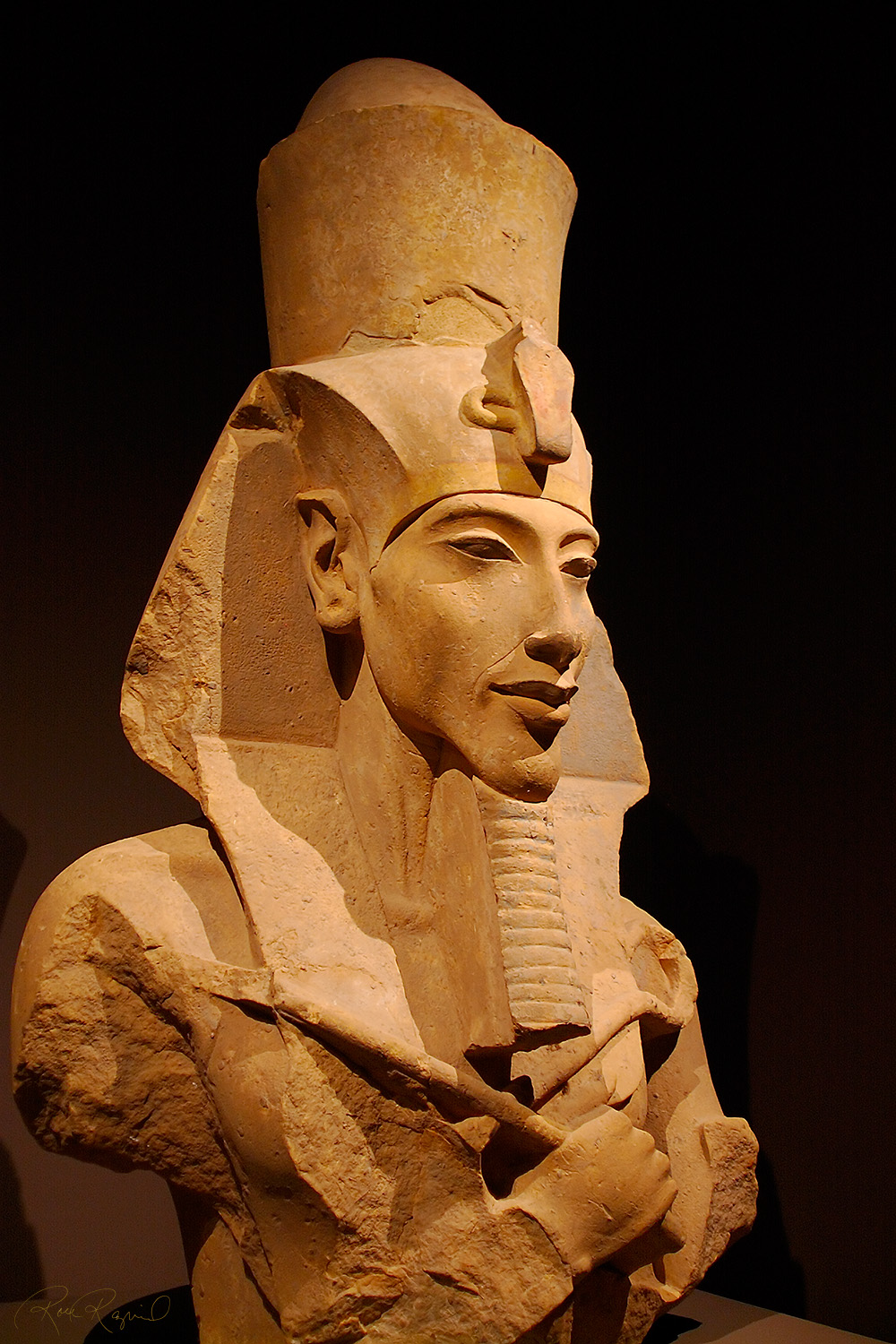
An ancient Egyptian sculpture of Akhenaten, taken when I was first developing the bracing technique. 1/8 sec. at 24mm.
|
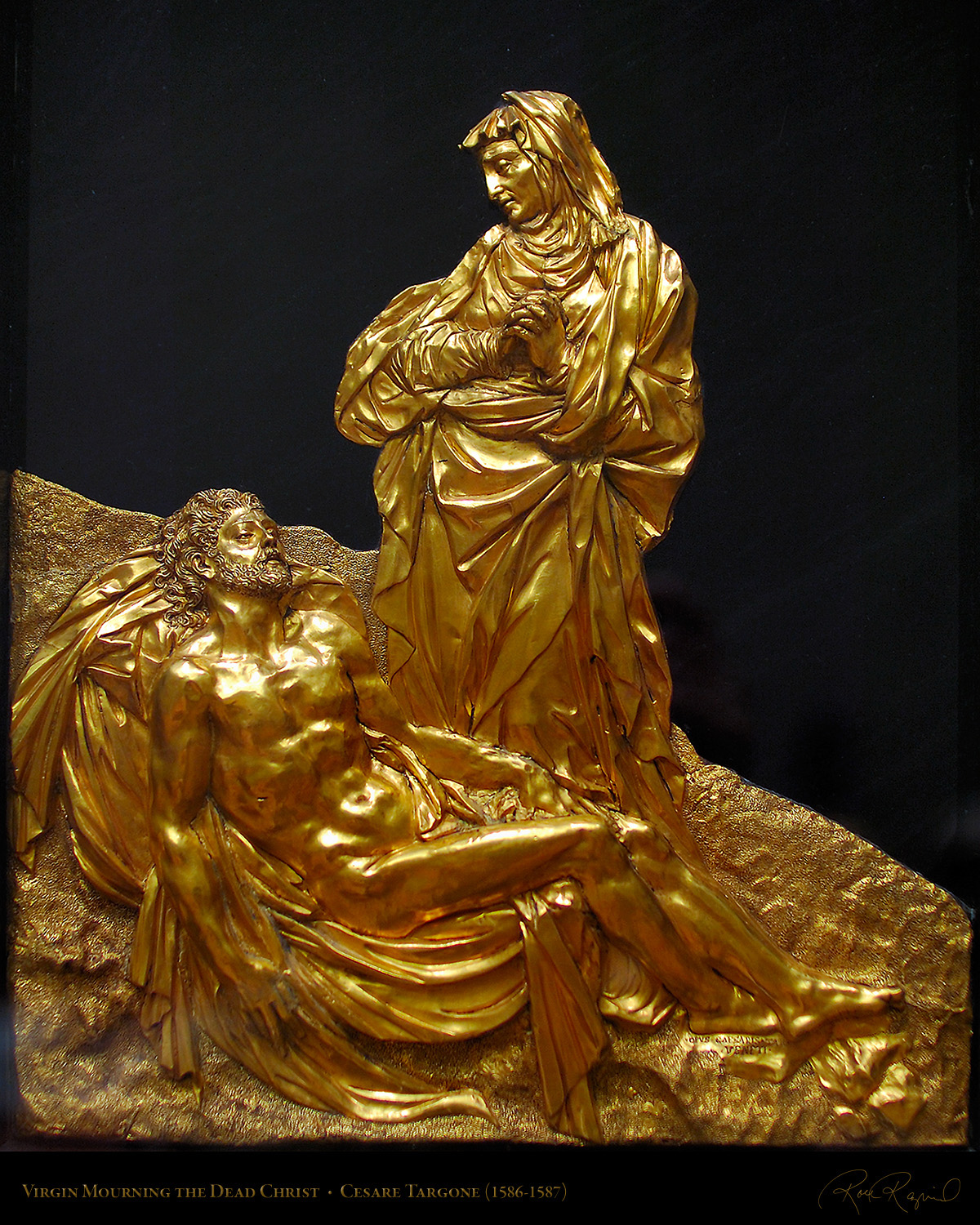
As a final example of what can be achieved using the bracing technique in situations for which I developed it, here are two examples of Art images, which would be completely useless if they were at all blurry (both taken in dark rooms).
The gold relief above was taken at 1/20 sec. at 28mm. Both images link to highly detailed 1500 pixel versions.
|
|
|
|
|
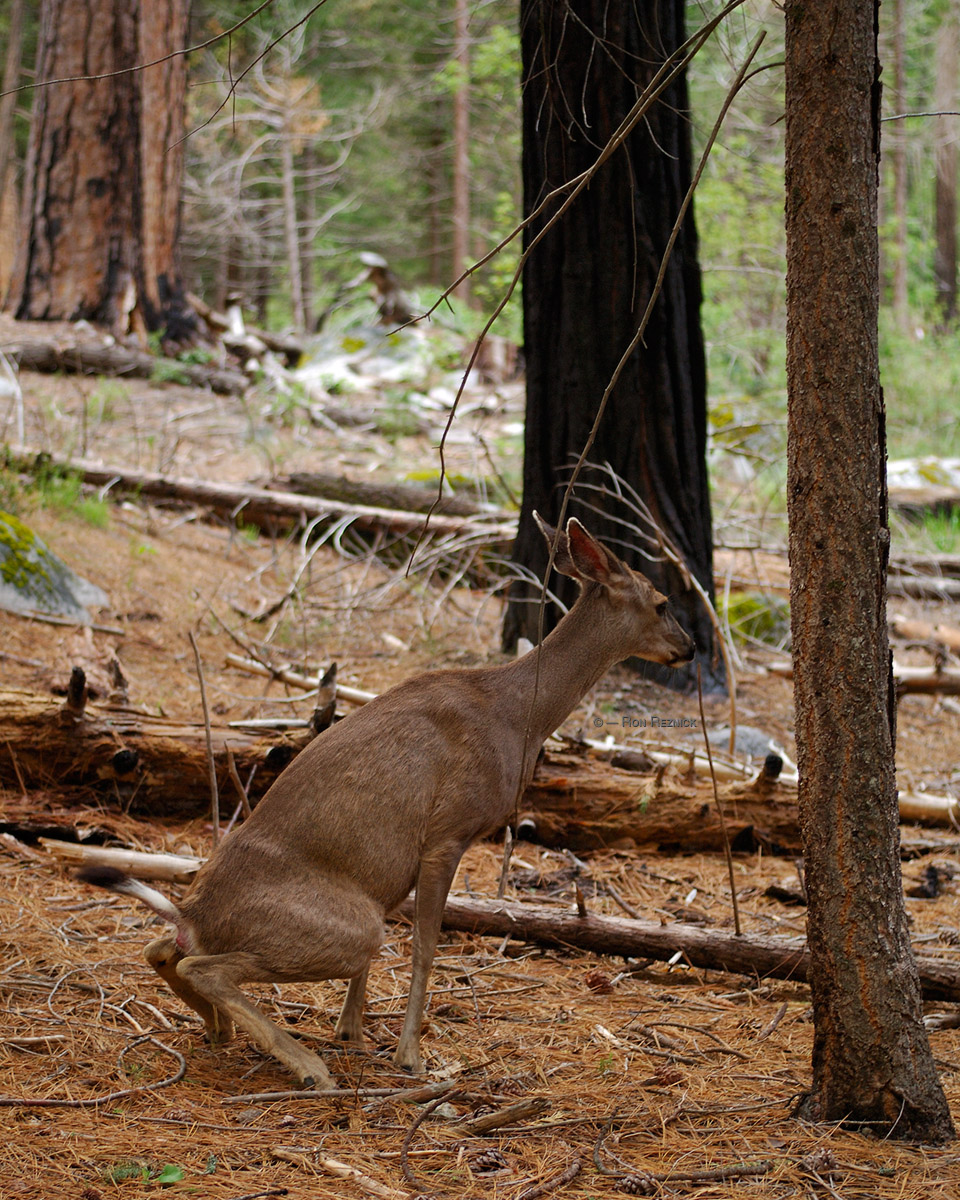
Shooting wildlife can often lead to some interesting situations. I have encountered moments that did not always lead to images that you would be able to do anything with (not that you would want to). As an example, on a trip to Alaska one of my students got proof of the old question as to whether or not bears poop in the woods. The image above left provides a bookend to his shot.
I suppose you can tell by now that I decided to have a little fun with this page.
|
|
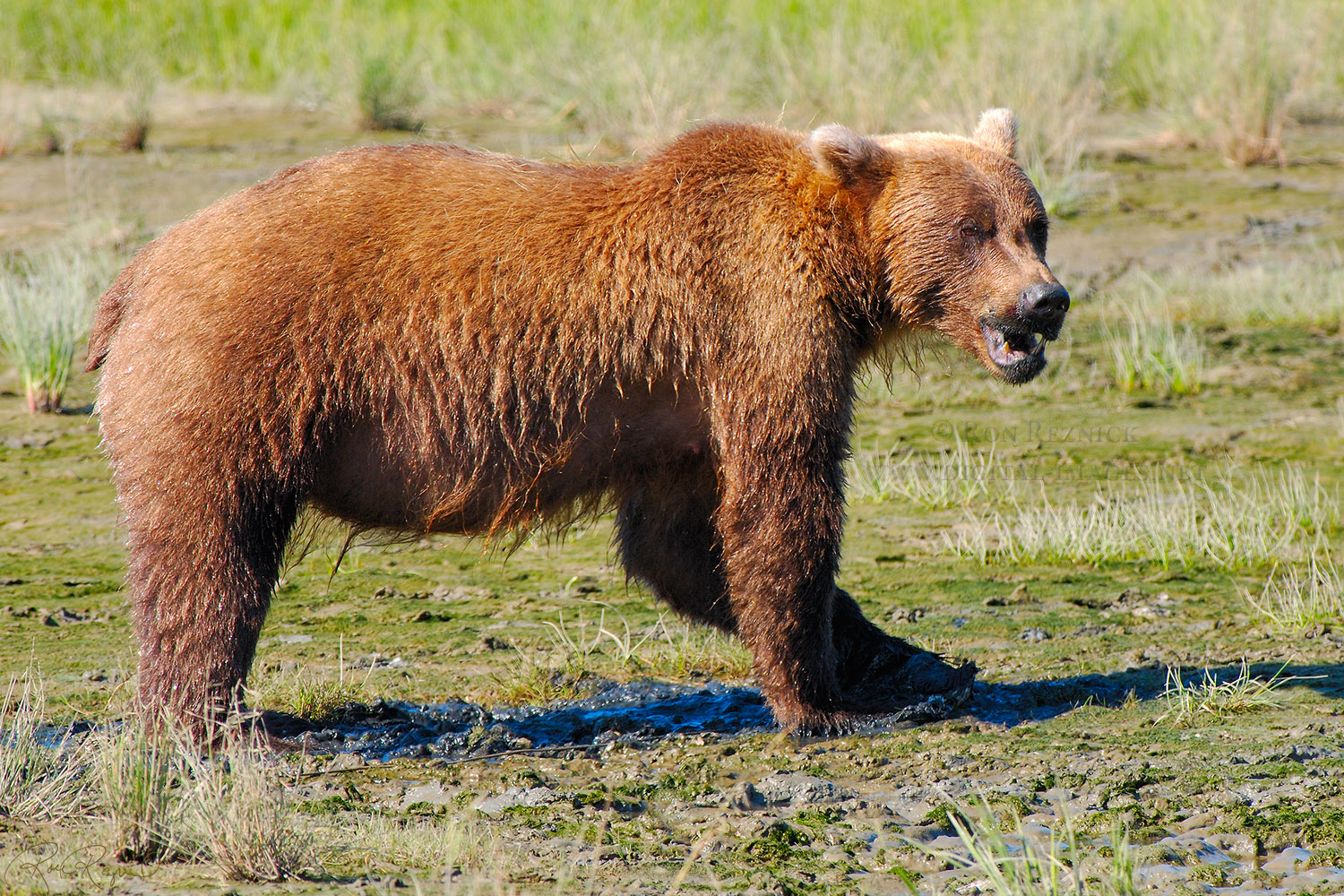
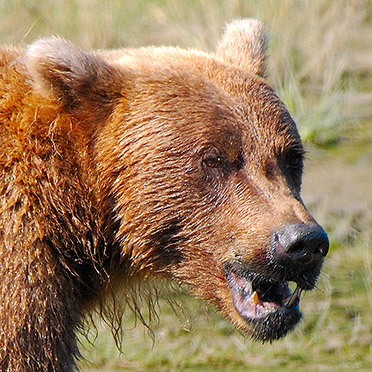
Not all critters are so nonchalant when you wander into them doing what they normally do in the wild. A bear was eating a silver salmon he had just evicted from a creek, when along comes our intrepid photographer. The image to the right is cropped from the larger version of the image below (he does look annoyed that we have been discussing his toilet habits).
|
|
|
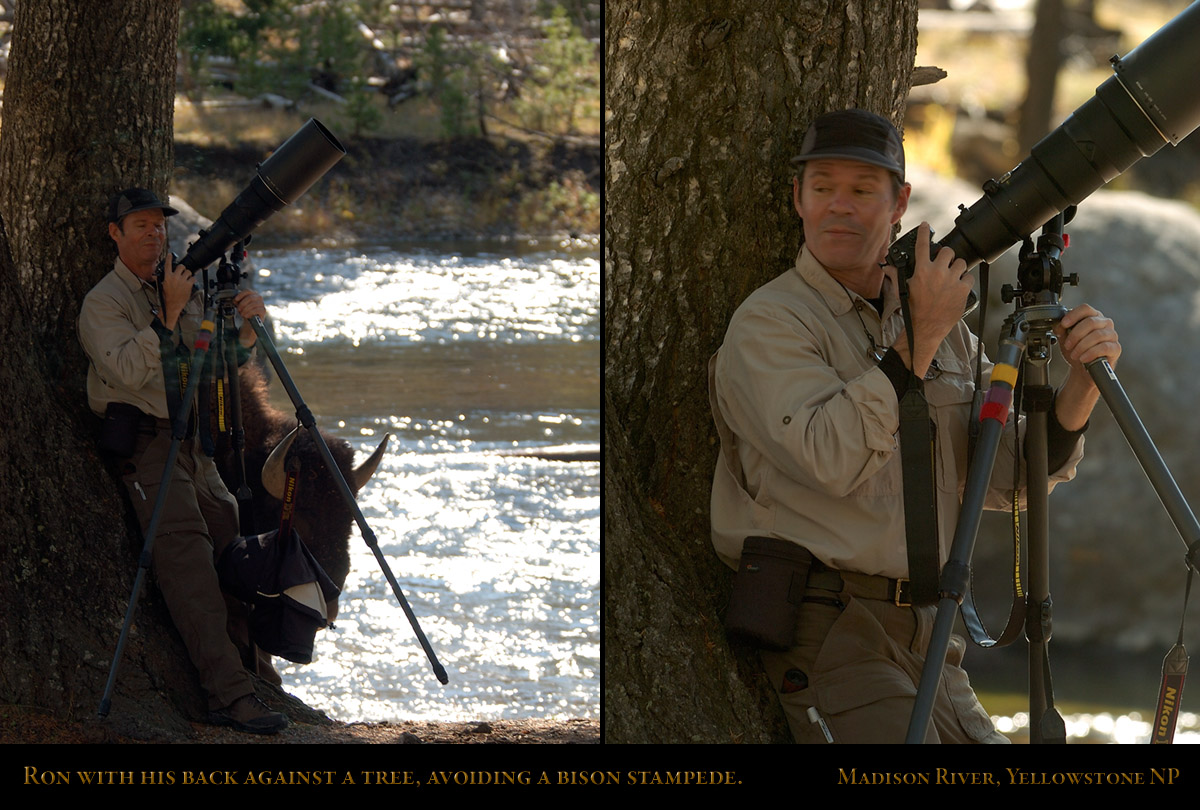
Now this is an entirely different sort of look... one day, I was shooting river otter on the bank of the Madison River with two friends who had driven in from Colorado. I had gotten several great images and was totally engrossed in their activity, when I noticed out of the corner of my eye that my friends and the others on the bank were moving off rapidly. Nobody said a thing, so I looked up from my viewfinder and noticed a herd of rapidly approaching bison who were funneled into the narrow riverbank and only about 100 feet away moving about 20 mph.
With all of the rocks, dead trees, and other obstacles on the riverbank, if I tripped trying to escape up the hill I would have been squished like a bug, so I did the only thing left, running towards the bison herd to get my back against a tree. I barely made it when the bison herd split around the tree. A close call.
|
|
|
|
|
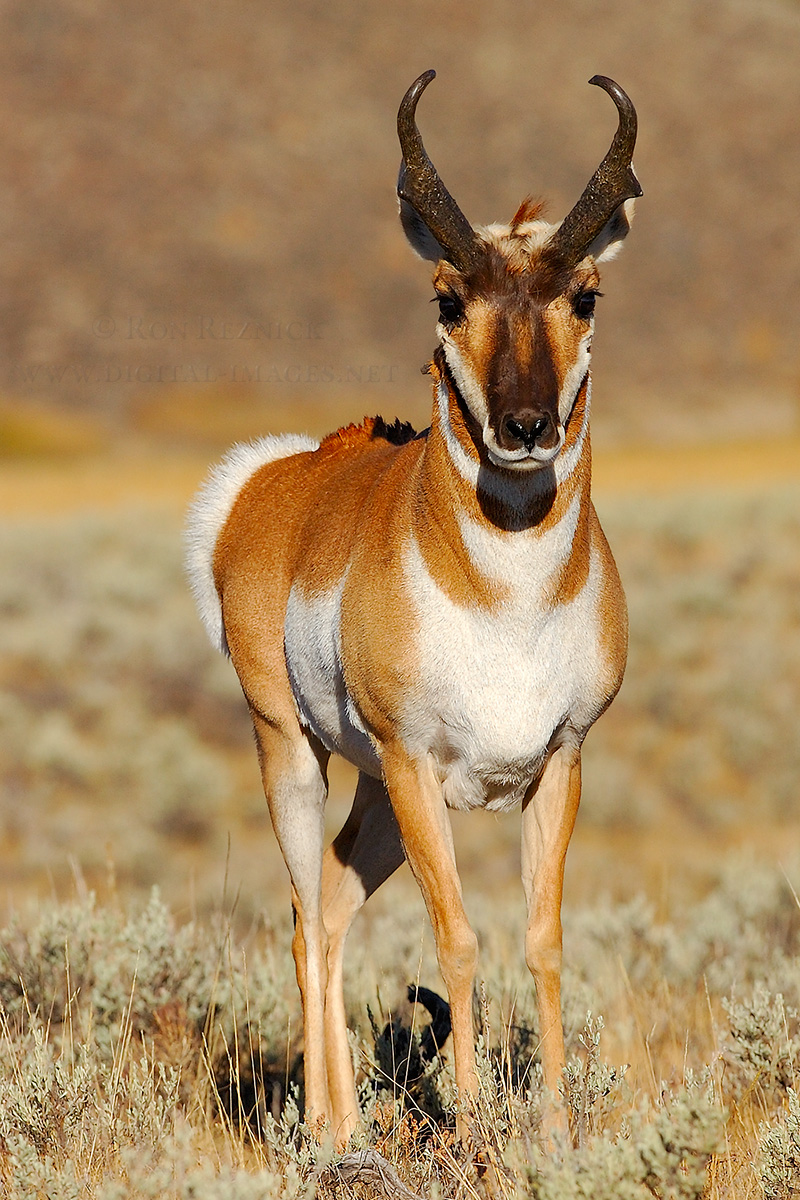
I have led myself (and a lot of other people) into all sorts of situations, getting close to some spectacular scenery and wildlife. In some cases, I stalked with one person to get very close for an incredible opportunity, such as the time a friend and I got within hackle-raising distance of the pronghorn shown at the right (pronghorns usually run when you get within 100 feet, but we radiated a zen-like calm and didn’t shoot until we were inside 30 feet). It doesn’t get much better...
The image above was taken at the top of Red Canyon, which is actually quite orange, but I guess “Orange Canyon” would sound like it’s in Florida rather than near Bryce Canyon, Utah. You would not believe what that place looks like at sunrise. Stop by the Southwest section for an in-depth look at Indian Lands, Anasazi Sites and Southwest scenery.
|
|
|
The Digital Images Website Project
Digital Images has been an ongoing project for a number of years. It has evolved from a basic display of images in simple galleries to a 9 layer website with 450 pages, displaying 20,000 images in a mixture of simple galleries and multi-page portfolios with detailed captions. Photography in several categories: Nature and Wildlife (birds and animals), Scenic and Travel, Gardens (portrait, scenic, and macro) and Art have been selected and carefully processed for excellence at full-size output, then prepared for reduced-size display on this website. In many cases, images are compiled into detailed portfolios and thoroughly captioned. Many galleries and portfolios are organized by venue, but some are compilations by species or other category.
This website is laid out more like a series of articles than a typical photography gallery website. Creation of the website, including creating and processing the images, web page and site layout, research and captioning has required tens of thousands of hours over many years. The intention was to create more than a display of my work. I hope it will be seen as a useful reference in some areas as well, and possibly a work of art in its own right.
Image Processing Techniques
For those who are interested in image processing techniques, here is a short dissertation on my workflow:
All image processing is done with the goal being optimum quality at full-size output (this is an entirely different and much more difficult operation than processing an image which is only going to be displayed in a reduced size for the web).
Processing the RAW image to the Master TIF is the first phase of operations. In this phase, corrections to White Balance, EV or exposure, color corrections and saturation, gamma corrections (midtone luminosity), rotation and image sharpness are set in 16 bit mode. The image is then saved to a Master TIF in 8 bit mode, AdobeRGB color space.
In the post-processing phase, the Master TIF is corrected for geometry (if necessary), cropped (if necessary), and any touch-up which is required is done (dust spots, noise reduction, etc.). Sometimes, special work is required on images that require extra sharpening, etc. Images are then saved as Post-Processed TIFs in AdobeRGB color space.
— Images are prepared for two types of output: Full-size and Web —
Full-size images are prepared from Post-Processed Master TIFs. Title Bars and Signatures may be applied and the images are saved as Compression 12 (minimum compression) JPGs in the sRGB color space (full-size images are available in AdobeRGB by request, but most clients ask for the images in sRGB). Smaller versions for sale are prepared from these.
Images for use on this website are resized down from the Post-Processed TIFs, then Title Bars and Signature, Copyright Mark and/or the Watermark is applied, and the large preview image is saved as a compression 9 or 10 sRGB JPG. The Watermark is then removed and the smaller preview (thumbnail) image is saved as a 9 or 10 sRGB JPG.
|
|
|
Well, I’ve enjoyed spending this time with you. I guess I’ll say goodbye for now. I hope you’ll stop back by when you have a chance. There are thousands of images on this website waiting for you, of all sorts of subjects from all sorts of places. Many people tell me that they get lost for hours, wandering around on this site. I ask them if they enjoyed it, and they tell me that they wouldn’t have spent hours here if they didn’t.
Maybe you will find an image or two that you would like to have for your very own. On each page, there is a black and gold banner that leads to my Photoshelter website, where the images prepared for sale at full-size output are stored. These images have been custom-processed for exceptional clarity and detail at full-size, and unlike many images do not have to be resized down to achieve clean results. I have kept the prices well under normal prices for stock photography, so I hope you find a few that strike your fancy.
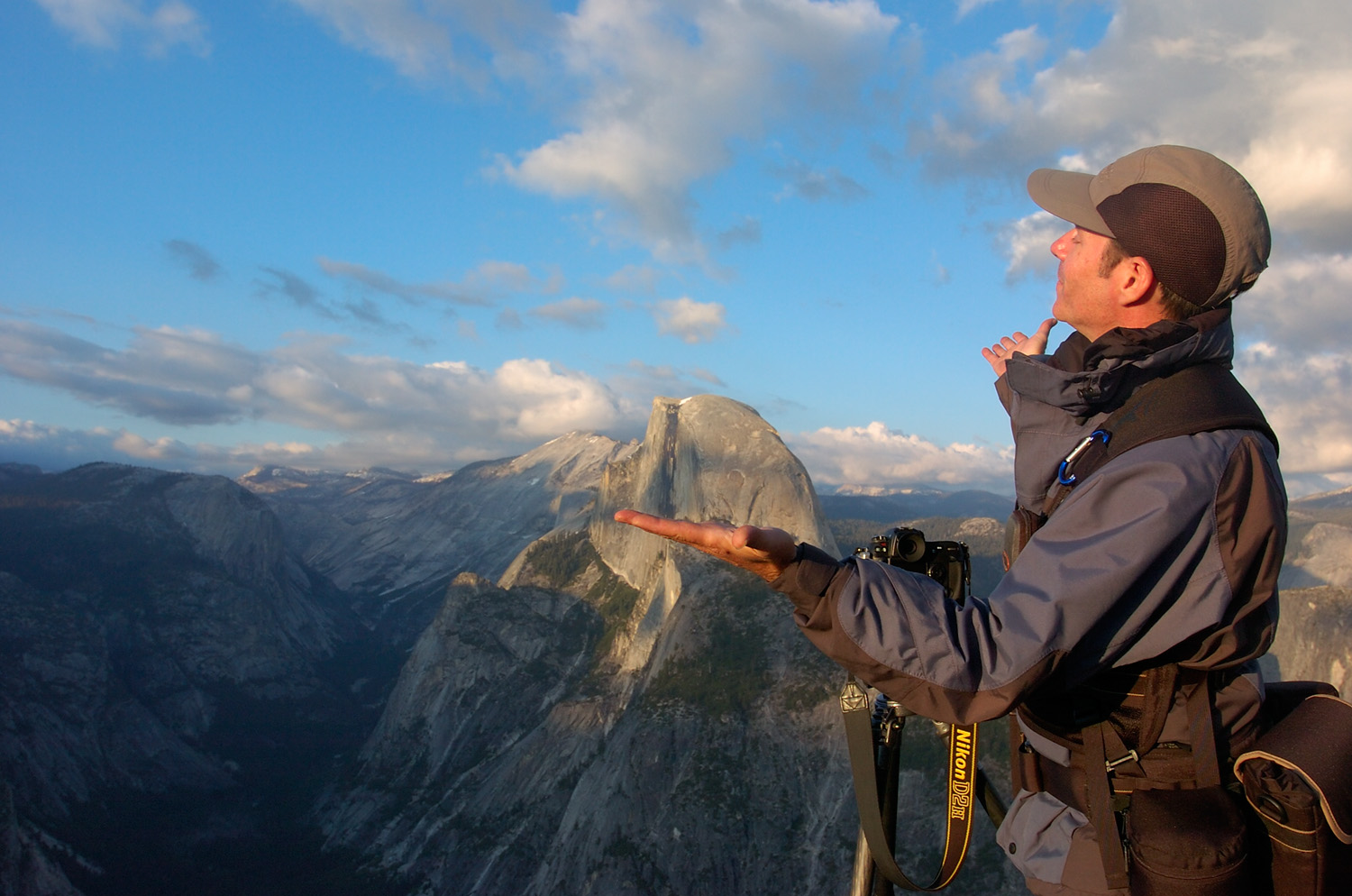
I’ll leave you with one last image, taken just before sunset at Glacier Point, Yosemite by one of my students. The light was as sublime as the scenery. It just doesn’t get much better...
|
|
|
|
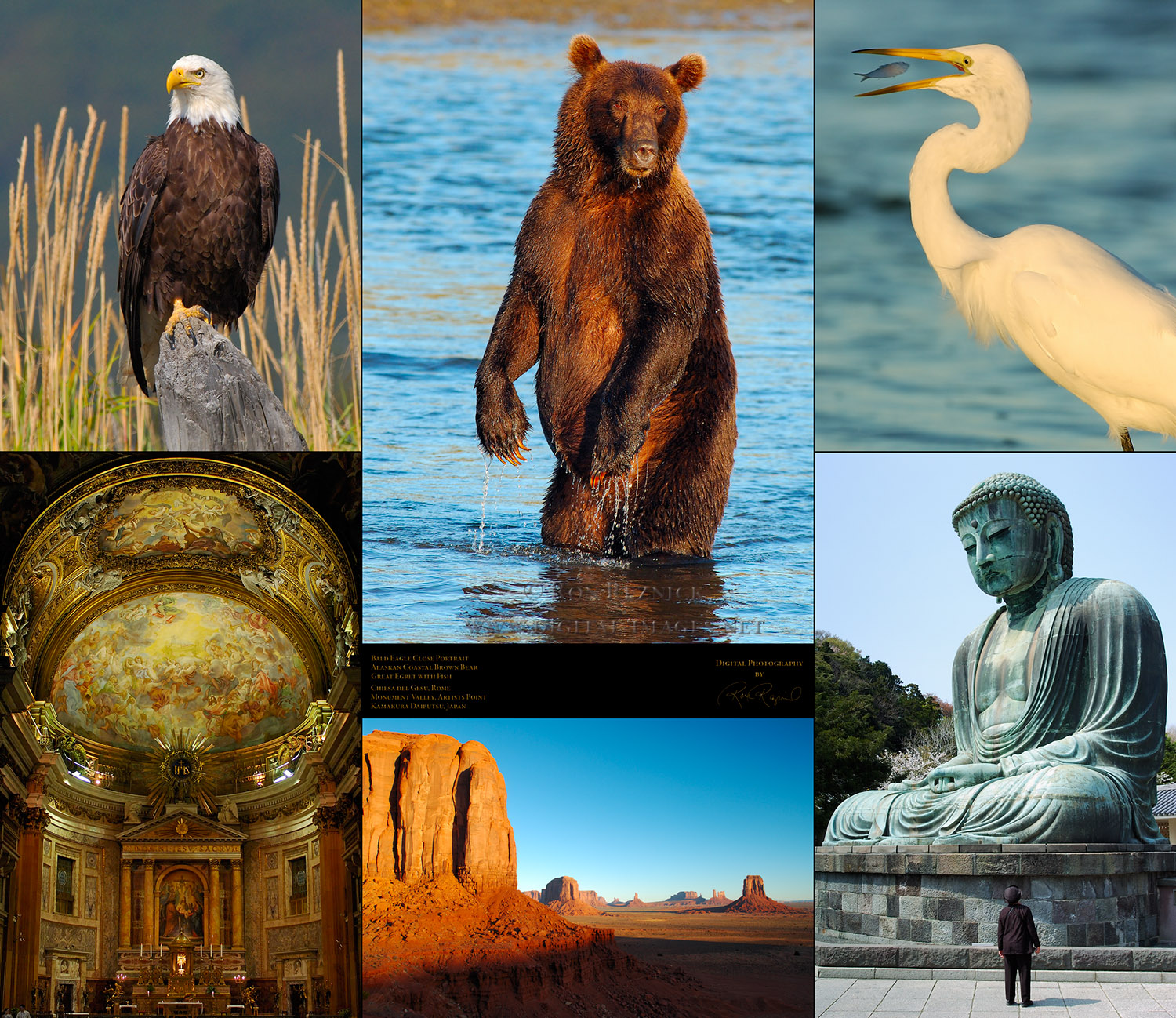
Click the image above for a 1500 x 1298 reduction of the signed and captioned SXL version.
The Digital Images poster is available in both SXL (3910 x 3384) and XXL (4958 x 4569) versions
(the primary difference other than image size is that the Great Egret is cropped in the SXL version).
|
|
|
|
|
|
|
|
|
|