|
|
|||||||||||||
Lenses
|
|||||||||||||
|
|
|
For those interested in testing their own lenses, This is a ZIP file containing a If can be printed from any application Click here or on the image This image is useful in testing lens sharpness,
|
|||||||||||
|
|
There is an interesting and informative |
||||||||||||
|
Prime lenses Nikkor 200mm f/2.0 AFS/VR |
Zoom lenses Macro/Field lenses |
||||||||||||
|
Click here for a full review of the Nikkor 70-200mm f/2.8 AFS/VR lens.
In the text below, each lens is linked to the page at B&H Photo,
|
|||||||||||||
|
As you become more experienced in the visual arts, you become more capable of seeing the various aspects of an image. You become more discerning when it comes to the elements of composition, the character of the color, the placement of the focused plane and depth of field, the level of detail, sharpness, and other characteristics of the image. Your standards become higher. Things that you used to be willing to accept are less acceptable as you become more sophisticated in your ability to 'see'. You notice things that you used to overlook. I'm sure you know what I mean, if not in this field, in another field in which you have a lot of experience. Lenses are designed to a standard, with a set of design parameters that include several capabilities that the lens designer has decided are important to the design and a level of performance in these areas that is capable of being achieved at the price point. To achieve some sorts of characteristics, compromises have been made in other areas. Generally, the high-end lenses have a more linear performance across a wider range of apertures than the lower-end lenses, which achieve their highest level of performance in a narrow aperture region and rapidly fall off in performance as you move away from that aperture region. Many lenses also have an optimum distance range where they tend to achieve their highest performance. To achieve high contrast, critical sharpness of small details, smooth focused-to-defocused transitions, optimal color fidelity, wide tonal range, a beautiful defocused region, etc., requires a high level of optical quality. To do all of this at a wide range of apertures, while offering a wide range of focal lengths at the same time, is extremely difficult. Usually, a series of performance compromises are made when offering focal length flexibility. The zoom lenses that exhibit the most linear performance to the highest standards are typically the narrow-range zooms, and the really high-performing ones cost quite a bit. Prime lenses are also designed to a standard... to achieve extremely high performance in all areas at a wide range of apertures requires very high optical quality which does not come cheaply. For instance, in some cases, the user's needs may not require extreme performance at the very widest apertures and closer distances, thus certain compromises can be made that allow the lens to achieve excellence at medium-to-small apertures and medium-to-long distance, with progressively lower performance in certain areas at closer distances and wider apertures, and this lens can be sold for a lower price than a lens that was designed with more linear performance to a higher standard of quality across a wider range of apertures, including the large apertures, and also including closer distances. So. What you must do is decide what level of performance you want to achieve, at what general distance range, and how much compromise you are willing to make in performance at various apertures (as well as the aperture capabilities which are important to you). For instance, what compromises are you willing to make to achieve focal length flexibility?
|
|||||||||||||
|
|
|||||||||||||
|
My lens kit selections:
Aperture Flexibility Short Focal-length Kit Focal-length Flexibility Short Kit Depending on the situation, I select a mix of lenses, e.g.:
You’ll notice that I have three lenses to choose from in the Normal range. This is a complex area (discussed in more detail below). The 35-70 zoom is a minimal compromise focal-length flexibility lens that is optimized for performance in the f/5 to f/11 range. While it has a closeup feature at 35mm that offers interesting possibilities, it’s not a great closeup lens. It is, however, a superb complement to the 17-35. The 45P is an unobtrusive little lens that yields excellent results between f/2.8 and f/11 at medium to long distances (it also does a very good job of closer work if you stop it down a little) The 45P has a similar character to that of the 85/1.4D. The 55 AIS Micro is a fully manual general-purpose lens from 1:2 macro distances out to infinity. It exhibits excellent performance at all apertures from f/2.8 to f/16. I select the lenses that will offer me the most options for the shoot and flank the primary lens with complementary lenses that extend the options based on likely needs.
|
|||||||||||||
|
|
|||||||||||||
|
Closeup lens kit The 55mm is selected when a Normal lens must be used for distant work The 105mm AFS/VR Micro is a wonderful update to the venerable 105 f/2.8D Micro The 200mm Micro is used as a single field telephoto/macro lens.
|
|||||||||||||
Telephoto lens kits These lenses all work very well at the wider apertures. The 85 and 135 are added to the longer lenses in situations where handheld short range wide aperture work is required in shadows or forests, etc. The 200mm f/2 AFS/VR is generally used as a shorter complement to either the 300mm or 500mm. It offers extreme subject isolation, fast focusing, teleconverter compatibility, and the ability to maintain higher shutter speeds when the light becomes difficult, at the expense of focal length “reach”. The 300mm f/2.8 AFS/VR is the most flexible single telephoto, offering high performance from f/2.8 along with high-speed focusing, vibration reduction, and teleconverter compatibility in a compact size. It gives the best compromise between reach and size, while allowing reasonable shutter speeds when the light drops. The 500mm f/4 AFS-II extends the reach while maintaining reasonable size and weight. This lens, along with the TC14e and TC17e teleconverters, can be carried into the field easily and can fill the frame with large subjects at great distance, or can be used on smaller subjects at distances that stay outside the fear radius of the subject. Used in conjunction with the 300/2.8 VR or 200/2 VR, you can shoot moving subjects at any distance and in any reasonable light. |
|||||||||||||
|
|
|||||||||||||
Thoughts regarding the 200-400mm f/4 AFS zoom vs. prime telephoto lensesThere are some situations where having a zoom is infinitely preferable. When shooting sports in good light, or in certain wildlife situations where the subjects are rapidly changing distances, if your desire is to be able to consistently change your composition at medium apertures the zoom is unbelievably handy. When you shoot with a prime in situations like that what you need to do is mount a TC or remove it, or work with the focal length you have and alter your composition based on your focal length. Another situation where the zoom is a very good choice: let's say you want only one lens in this focal range, and you don't often need to shoot in lower light (or if you do, the subjects
will be mostly static). Having the flexibility of the zoom may be better than having the prime-lens and TCs for you. Now, let's look at the overall situation and why I prefer the prime lens options. The 200-400 is a large lens(physically, it's the size of the 500mm), and while it does a pretty nice job at f/4 (esp. at 200mm), it requires stopping down to f/5-f/5.6 depending on focal length to reach what I consider the 'sweet spot'. To maintain ultimate quality at dawn or dusk (or into shadow), you will likely want to stop down a little, and if the subject is moving that means the shutter speed will be lower so you need to raise the ISO. Also, the lens is pretty large and heavy, and unless you're pretty strong you won't be able to handhold long, and the results will be marginal unless the shutter speed is pretty high. It's also a lot of lens to carry into the field -- the size is more of a problem than the weight is. It's tough to hike with it (the same problem as hiking with the 500mm), which means that you'll want to work from a pack, slowing down access to the lens. The 300mm, on the other hand, while not all that much lighter (about a pound), is a heck of a lot smaller. Based on my evaluations of the results of the 300VR with TC14e, it is about equal to the performance of the 400mm end of the zoom at various apertures, so there is no loss there other than the convenience of rapid focal length changes. It is one heck of a lot easier to pack into the field, much faster to access from a lens case, and it can be hiked with exposed (slung on a strap), allowing faster and easier access. You can get top-grade results at f/2.8, thus at 300mm you can gain 1.7 to 2 stops depending on your standards, with more isolation of the subject (if that is what you want to do). You'll have a higher shutter speed, and can stop action better... plus, you can handhold the lens much more easily with a higher-grade result. The contrast is higher, and detail resolution is as well. I consider the 300mm f/2.8 to be the most flexible telephoto, but of course you can't shoot the field of view at 200mm as you can with the 200-400, and you can't switch focal lengths as fast. You're trading ease of carry/use in the field, an extra stop+ to 2 stops, handholdability and additional isolation and contrast for convenience, speed of focal length changes, and the 200mm field of view when comparing these two lenses. The 500mm is the same size and weight as the 200-400 (it has a larger hood though), but it doesn't have VR (unless you have the latest version) and it really isn't a hand-holding lens at
all. I've shot handheld with it a few times, but that really isn't a good way to use this lens. You need a LOT of light to do it successfully. What you're getting there is the ability to shoot at 500mm at f/4
cleanly, with high contrast, keeping your shutter speed and level of isolation high. The 200-400 can shoot at 560mm with the TC14e, but you really need to be at f/8 to get high grade results to my standards. That's
two stops. Lots of shutter speed difference there. I can shoot at 700mm wide open at f/5.6 with a small reduction in sharpness and contrast, or stop down to f/8 and achieve excellence. I can shoot the 500mm at 850mm
at f/8 and get high-grade results. That's one heck of a lot of reach, and AF speed and accuracy is still high with either TC. I don't mind working with two lenses. It's more expensive that way, but I can achieve excellence and good focal length flexibility with the use of TCs, while still keeping the isolation high due to the wider apertures I can use at various focal lengths. I do have to mount/dismount TCs. I can either work with the 300mm on one body handheld along with the 500mm, or the 300mm plus TC on the tripod and the 200mm handheld with or without TC on the other body, or the 200 along with the 500mm (this is why I got the 200mm, really... to use with the 500mm -- I can gain a lot of low light capability and can still shoot at ~300mm while carrying a short but stubby and heavy lens). I have a 135/2DC, which is a magnificent lightweight medium telephoto for use in a forest or other situations and is a perfect complement to the 300mm, but it can't be used with TCs and does not have AFS focusing. I like that lens a lot, but got the 200mm recently to see how it would be on a wildlife shoot (Alaska), and find that it is an excellent complementary lens for the 300mm (I already knew it would be perfect for use with the 500mm), allowing me to handhold with AFS and VR and use TCs for extended reach.
|
|||||||||||||
|
|
|||||||||||||
|
|
|||||||||||||
|
Information to help you select your own kit |
|||||||||||||
|
|
|||||||||||||
|
Lens Selection |
|
||||||||||||
|
|
|
||||||||||||
|
My kits are selected for maximum flexibility in low-light, portrait, scenic, macro, tele-closeup and telephoto work. My field lenses were chosen for the ability to shoot at distance as well as extreme closeups -- flexibility is of utmost importance to me. I have decided after testing a large number of lenses that for the most part, primes are far more attractive to me than zooms even though zooms are more convenient. I have set up my kits so that I can cover the range with lightweight sets and the capabilities I need for a specific shoot, although that meant that the number of lenses is higher and there is less convenience. The performance achieved is far greater though. I am pretty critical when it comes to detail retrieval and fine-detail rendition. When you are first moving to the SLR and assuming that you are using decent-quality lenses, until you start examining things carefully it is likely that you will be very pleased. When you look at the edges of the frame, or open the lens aperture up, or go beyond the 'sweet-spot' distance for the lens in question given a certain aperture, if you can start to see loss of fine detail or reductions in sharpness you might not be happy with that lens's performance at some point in the future. Some lenses have a high degree of flare in certain conditions. All have a 'sweet-spot' range of apertures and distance -- often the range changes depending on the aperture. Essentially, what I look for is contrast, sharpness, and most especially fine detail retrieval. While you can process for more contrast, and to a certain extent you can sharpen detail that is rendered, if the detail is not there you cannot pull it out of thin air. Basically, I want a lens to perform it's function properly, to a high quality standard, within a range of apertures and distances that allow me to make proper use of the lens in the situation for which it was designed, and I'm willing to accept some reduction in performance when using the lens outside of that range. If a lens forces me into unacceptable compromises when I attempt to put it to it's intended usage, that annoys me. If I try to use it within an aperture/distance range that makes sense for the purpose I acquired the lens for, and the results are not satisfactory to my admittedly ridiculous standards, that annoys me too. I do of course expect lesser results if I'm trying to make a lens go outside its sweet spot, but I don't allow a lens that annoys me to live here. :^) What I've tried to do is give my evaluations of various lenses and some suggestions as to what to look for and how to make decisions on glass. You have to decide what sort of compromises you are willing to make. Everything is a compromise of one sort or another, and as long as those compromises fit within your needs, a lens will be a good tool for you.
|
|||||||||||||
|
|
|||||||||||||
|
|||||||||||||
|
|
|||||||||||||
|
|||||||||||||
|
General-purpose lensesMany people want a lens that can be used as a do-it-all travel or general-use lens. When I started with the D1, the first lens I chose was the 24-120mm f/3.5-5.6 Nikkor, based upon a
recommendation from two people whom I respected (the current, better version is the 24-120mm f/3.5-5.6G AFS). This lens has a fairly wide range, from medium-wide to short telephoto, and has a reasonably wide maximum aperture for a fairly bright viewfinder, however, images from
this lens are soft unless the lens is stopped down to at least f/8. At f/11, the results are quite good, but of course the depth of field at that aperture does not offer much subject isolation. In addition, at the
24mm end there is significant barrel distortion, and I was never satisfied with the images taken at the 120mm end for a number of reasons. Another major detraction of this lens is the poor defocused character (the
out-of-focus, blurred region highlights show dark centers and very bright edges, and these highlights are extremely distracting). From around 28mm to about 105mm, the lens does a fairly good job when stopped down to
f/8-f/11 however (the newer version is quite a bit better). |
|||||||||||||
|
‘Normal’ lenses The ‘Normal’ range is very difficult, as there are so many uses for lenses in this range and nothing does it all. I have rethought this range far more often than any other, and have tested lenses extensively. I hope the summary below helps you in your decision-making process... There are a number of options when it comes to ‘normal’ lenses (those that approximate the field of view of the human eye). Deciding on a prime or a zoom in this range is difficult -- the prime lenses offer exceptional performance and faster apertures at a lower price, but have distance or other limitations and of course are limited to a single focal-length. The better-grade zooms are much larger and heavier, slower-aperture, more costly, and for the most part have a different set of limitations. When I decided that the general-purpose lenses did not satisfy my needs for ultimate quality, I started looking at the Tokina 28-80mm f/2.8. I compared it to the Nikkor 50mm f/1.4 and the
Nikkor 35-70mm f/2.8D. The Tokina meters a bit underexposed in all but bright daylight, has a slight lack of contrast in comparison to the Nikkor lenses, and is a little undersaturated in color, plus the color
balance is slightly off requiring that all images be color-adjusted in post-processing. It is quite soft at f/2.8 (more so than the 35-70/2.8D Nikkor), and the flare and ghosting when a bright light source is
in-frame or just outside of the frame is heavy (this is improved by stopping down the lens). Both samples of the lens illustrated the same characteristics, and were ultimately sent back to the dealer.
|
|||||||||||||
|
|
|||||||||||||
|
The 50mm primes (f/1.8D and f/1.4D and the newer f/1.4G AFS) are exceptional performers -- the f/1.8 lens does a fabulous job
from f/4 to f/11 and from 5 feet to infinity, and is quite good at f/2.8 and f/16. It is one of the best lenses available in the ‘normal’ range for medium-to-good light work, especially for infinity work. The f/1.4D
is noticeably better at f/2.8 to f/4, about equal at f/5.6-f/8, and a lesser performer at f/11. It can be shot at f/2 in a pinch as long as you don’t mind the edges and corners being a little soft. The 50/1.8 has a
little less distortion, but the construction quality is annoying in my opinion (considering the quality of the optics, I guess they had to cut corners on the construction quality to sell it for under $90). The only
real issue with the 50mm lenses, besides the fact that they don’t do as good a job close-up as they do at medium-to-long distance (and it’s a small problem given the cost), is that they offer a rather mundane field
of view and perspective for most people (most folks (including me) would rather shoot either a wider or longer lens most of the time) but for the utmost performance at the least cost (and definitely for a
single-lens outing) the 50mm lenses are among the best lenses you can put on the camera (I owned the 50mm f/1.4D for 2 years, finally selling it to gain flexibility). As always, carefully consider your needs.
|
|||||||||||||
|
|
|||||||||||||
|
Closeup lensesYou want:
Remember that these lenses are primarily designed with optimizations for closeup work. The 200mm reaches 1:1 at 20" from the imaging plane. If you use the hood, that's about 10" in front of the hood. If not, add 2.75", making it about 12.5" from the front of the lens. The 105mm is about 7.5" from the end of the lens at 1:1 , and the 60mm is about 5.75". I use an HN-23 hood on the 60mm and that gives me about 4" at 1:1, but I don't use the 60mm in the field at 1:1 very often -- usually I stay between 1:2 and 1:4 when I'm shooting closeups with the 60. You can see the difference in working distance at maximum magnifications. The 60mm is a very high-contrast, flat-field lens for use at close distance to 3-5 feet. It excels at close work, and falls off in performance as you exceed 7-10 feet. As you go beyond the 7 foot range, focusing precision falls off because the lens has the gearing set so precision is highest at the closer end of the range. You also need to stop down the lens to the f/8 to f/16 region for best results at distance. It is without a doubt one of the sharpest lenses in the under 7ft. range, and the quality under 3 feet is exceptional. The lens does not have an exquisitely beautiful defocused region, so except when focusing really close with the background transition occurring significantly behind the subject it's a good idea to avoid highlighted backgrounds (they can get distracting). Defocused transitions are good. It works best between f/5.6 and f/16 at short-to-medium distances, f/8 to f/16 when really close or beyond 7 feet. As you open up the aperture you lose some sharpness at the edges and the quality of the near-subject defocused region becomes a noticeable part of the subject. It works quite well at wider apertures but not up to the standards of the lens's quality at middle apertures. The original 105mm Micro loses a little contrast and sharpness to the 60mm, gains a little more reach (~80mm at 1:1. The focal length reduces as you focus closer), and a little more working distance. The 105mm is a better lens if you are planning on shooting small creatures up-close hand-held. The reduction in contrast and sharpness is offset by the flexibility of working distance and a little extra reach in some shooting styles. Again, this lens is at it's best in the same general aperture ranges as the 60mm. The overall image quality is lesser than the 60mm, but flexibility is greater in the field. This may not be an issue in a controlled environment with fixed subjects, and in that case the better short closeup lens is the 60mm. After a while without a 105mm closeup lens, I acquired the 105mm f/2.8D AFS/VR Micro, which outperforms the original in just about every category I can think of. It offers image stabilization and high-speed autofocus (although you’d better use the focus limiter if you are planning on using AF). It is still best to use manual focus most of the time when you are shooting extreme closeups, but the AFS along with the focus limiter allows you to track moving subjects at very close distances much better than can normally be done with manual focus when depth of field is shallow. (I recommend stopping down a bit when trying this to increase the depth of field, though). The 200mm f/4 AF Micro offers aperture and distance flexibility, exquisitely smooth defocused transitions and backgrounds, high contrast, extremely fine edge-definition and detail retrieval, and maximum working distance. You can shoot the lens from f/4 to f/11 with confidence, at any distance (stop down a little for edge -of-frame sharpness at distance). The detraction is weight, length, and cost. I chose to use the combination of the 200mm and 60mm Micros to give me maximum flexibility and quality at the widest range of apertures and shooting distances. The costs were high and I have to carry two lenses in some situations, although the 200 Micro makes an excellent single field-lens. Given a need for a closeup lens for product photography, you have a different pair of choices: if you need control over the plane of focus and perspective, using the tilt-and-shift capabilities of the 45mm f/2.8 PC Micro or 85mm f/2.8 PC Micro will give you this control. The lenses requires stop-down setting and are complex to set up and meter with if you use the tilt/shift capabilities, so you have to be far more deliberate to work with them, but the results they yield are not achievable without the T/S capabilities. They are expensive, specialized lenses that happens to be designed with this particular usage in mind. In the studio, with inanimate objects that can benefit from perspective control and control of the focusing plane, they are invaluable. The other option for uses like this is the 60 Micro, which excels at close compositions of 3D subjects. You need to decide whether you require control over the focusing plane and perspective, then whether you are willing to give up some conveniences of use to gain that control. Hopefully you have enough information to decide what your best choice would be in a closeup lens.
|
|||||||||||||
|
|
|||||||||||||
|
|
|||||||||||||
|
There are several ways to look at the telephoto situation in my opinion.
The first situation above is perfect for the use of a telephoto zoom. These offer flexibility of focal length in a single lens, with top-quality results between f/5.6 and f/11 at medium-to-long distances, and progressively lesser performance as you open the aperture up. The 70-200 AFS/VR offers high-speed focusing and vibration reduction as well as very good performance with or without the TC-14e teleconverter (100-280mm f/4) -- in either case the best performance is achieved stopped down a bit. Defocused character at wider apertures is quite good in the AFS/VR. The earlier versions of the medium-telephoto zoom lens (AFS and AF-D, AF ED push-pull) as well as third-party options have one of more of the features missing, although the AFS version (with high-speed focusing motor) is quite good. The AF-D is without the focusing motor and vibration reduction, is a lesser performer at f/4 or at closer distances, but still focuses quite fast and works very well at medium-to-long distances between f/5.6 and f/11. The earlier 80-200 AF ED (push-pull version without tripod collar) that I tested tended to overexpose and had lower contrast. These zooms offer flexibility of focal length, at the expense of wide aperture and close-up work, a higher shooting weight, lower contrast in some cases and a tendency towards flare. This situation can also be covered with a short-telephoto and medium-telephoto prime lens set, which lowers shooting weight, improves performance in many situations and esp. at wider apertures, and generally improves shorter-range performance at the expense of single-lens flexibility. The second situation is perfect for a set of high-grade primes. The 85mm f/1.4D, 105mm f/2DC and 135mm f/2DC all work very well at wider apertures, allowing for shallower depth of field and higher shutter speeds. The 105mm is an excellent single-lens solution for this situation, and it really does do very well at f/2... better at f/2.8-f/8. The combination I use in this situation is the 85 and 135, as I need the ability to reach out to the subject in some low-light telephoto situations, as well as a short-tele for portrait and similar-range work, and sometimes a tool that can be shot in very low light at f/1.4 and provide top quality results in the center of the frame. There are a number of other choices in lenses in this range, including lenses that handle situation #1 above a little better than the very fast telephoto primes, at the expense of their quality at wider apertures (e.g. the 85mm f/1.8D). The third situation requires a specialized lens if you hope to do quality work in all situations. There are some zooms that offer closeup capabilities -- most are better at distance than up-close but are adequate for limited closeup work. Some primes that are designed for longer-range work also do a very good job for close -telephoto. You can also carry a closeup lens (diopter) to add onto your telephoto lens. Any of these options work (some better than others) for closeups, but there are a few specialized lenses that can do well in the field , in all situations. The Nikkor 70-180mm Micro zoom was designed specifically for this sort of work, and while it is excellent close-in, I found that it had some compromises when used as a standard telephoto at wider apertures, which made me decide to go a different way. The 200mm AF Micro allows me to have enough reach for many field situations that require a longer lens, yet still focus extremely close (1:1) while maintaining maximum working distance, and it is capable of yielding a clean image from f/4 to f/11 (and f/16 depending on focusing distance)... at the expense of focal length flexibility. When I am working with the 200 Micro I invariably carry the 60 Micro as well, which also focuses extremely close and allows me to have a shorter focal-length available at need (the 60 Micro is exceptional at close-to-medium range, but performance falls off at distance). Another option for a field telephoto that is capable of dramatic, lesser-magnification closeups is the 300mm f/4 AFS, which goes nearly 1:3 at it’s minimum focusing distance of 4.75 feet and does a very good job up-close.
|
|||||||||||||
|
|
|||||||||||||
|
While the 200mm focal length is an excellent mid-telephoto range, the 200mm f/4 AF Micro is a specialized type of 200mm. It is a tool that is highly-corrected for close-work, and while it
yields top-grade quality between f/4 and f/11 and at any distance between right-in-your-face (min. focusing distance = 20" from the film plane -- about a foot in front of the lens) and infinity -- the
requirement for precision focusing at close range means that you have a slow adjustment of focus at closer distances due to the gearing, and a very short travel for adjustments at distance. This makes use at
distance trickier, and also slows down overall focusing speed to the point where, even with the limiter, the 200mm Micro is no focusing speed-demon. It's a little slower than the 180mm f/2.8D prime, which is in
itself no speed demon.
The thing is, with a telephoto you can get lenses that are designed for use at 10 ft. to infinity with extreme precision and quality, lenses that are designed for close-to-medium range
work with extreme precision and quality, or compromise lenses in some respect. This goes for a lot of situations and telephoto focal lengths. Define your situation... you may find that a 70/80-200mm f/2.8 zoom is
adequate for your needs assuming that you do a lot of your work at f/5.6 to f/11, and can accept some compromise in detail and sharpness as you open the lens up wider than about f/5 or focus near the minimum
focusing distance (in the range of about 5-8 feet). Some lenses are capable of excellence beyond their primary range of design as long as you know how they work best. Another superb telephoto zoom is the 200-400mm f/4 AFS/VR.
This is a large (about the same size as the 500mm f/4 AFS) expensive zoom that can cover the need for variable focal lengths while shooting wildlife or sports. Earlier on this page (just above the photo of the
Geisha) I discussed my opinions on the selection of the 200-400 AFS/VR vs. prime lenses. There are good reasons for going both ways, but if you want a single lens to cover this range, the 200-400 AFS/VR is really
the only option (I either carry two prime lenses plus teleconverters and gain aperture flexibility and isolation, focusing speed, and the ability to hand hold at the cost of higher expense and the need to switch
lenses or add teleconverters, or make do with just the 300mm and teleconverters and give up the shorter focal length).
|
|||||||||||||
|
|
|||||||||||||
|
|
|||||||||||||
|
When selecting kits, I will first decide whether I am likely to need to shoot wide-aperture or not and then base my selection on the focal-length needs for the shoot. Sometimes, I will allow myself the option of shooting across the aperture range but at different focal lengths or distances. All lenses have a sweet-spot for aperture and distance -- some are quite wide and others are narrower. I try to mix lenses in my kit based either on similarity of character or flexibility within the needs of the shoot. One way to gain flexibility is with the use of zooms... this generally restricts what you can do at wider apertures as zooms tend to operate best at middle apertures. Sometimes, I will mix the wide zoom with the high-speed short or mid-telephoto for this reason, or the high-speed wide-angle with the telephoto zoom. At other times I will work with both the wide-angle and telephoto zooms, and plan on shooting middle-aperture work for the most part (the AFS/VR works very well at f/4, but the 17-35 is best from f/5.6 on). When selecting prime-kits, generally I will select lenses that are similar in character but widely separated in focal length, but sometimes it is useful to mix widely-variant lens designs (e.g.: sometimes I will carry the 60 Micro with the 135/2DC to get extreme-closeup to medium-range excellence at middle-to-small apertures, along with a wide-aperture telephoto). Again, it is a good idea to plan your lens selection based on the requirements for the shoot, but to give yourself as much flexibility as possible. Some favorite combinations include:
Favorite single-lens options:
|
|||||||||||||
|
|
|||||||||||||
|
Tripod Heads |
|||||||||||||
|
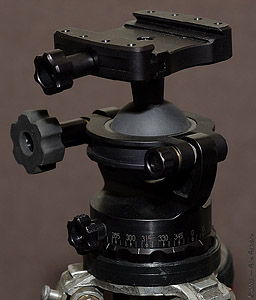
Acratech ‘prototype’ Head |
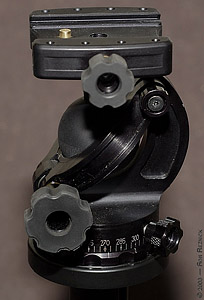
Acratech Ultimate Head |
||||||||||||
|
Acratech has created a head based upon the prototype shown above, but with a drop-notch allowing
|
|||||||||||||
|
|
|||||||||||||
|
click here or on image above to open a different 200kb composite of the RRS BH55 head For those times when a tripod is essential, I use a Gitzo Carbon Fiber tripod as my primary tripod. I use an old aluminum Gitzo Sport Performance Tatalux (current model GT-2331) when I need a very small tripod for travel (sometimes with a short center-column for low-angle macro work and low-angle telephoto). I am using a Gitzo 1300-series Carbon Fiber (CF) tripod (current model GT-2531) for the extra stability in windy conditions when using the 500mm lens. I also occasionally use a Gitzo 1588 CF monopod (current model GM5541), chosen because the large diameter legs make releasing and tightening the adjustment collars quite easy even in cold conditions with gloves and the large diameter padded handle makes supporting a large heavy telephoto and body combination on your shoulder easy while hiking (plus it makes a great hiking staff when the telephoto is in the pack). I have a 1200-series Gitzo tripod (current model GT-1531) for general use (when not using the 500mm lens... the 1200-series does well with the 200mm f/2 or the 300mm f/2.8 except in a high wind). My Acratech heads (shown at top, above) recently found new homes. The Ultimate Head is a tremendously versatile head for portrait work, scenic work, and any other use where a lightweight head capable of handling most lenses in any situation is needed. It is well-machined and reasonably priced. I replaced them with newly designed heads from Acratech and use them on my 1200-series tripod and monopod. On my large tripod I use a Really Right Stuff BH-55 ballhead (see above), with lever clamp. This head is about 1/2 pound heavier than the Acratech, but offers more precise control and the ability to handle more mass. The drop-notches (2) are in somewhat unusual positions, and if you’re not using an L-bracket on the camera body, the lever clamp should be placed to the rear when dropping the head into the notch. The exquisitely machined head offers highly adjustable and repeatable settings for ball tension when the main ball-lock is released, is extremely solid with lenses up to 500mm f/4 (all I’ve tested it with to date), the controls have good feel and are placed in very intuitive positions. The head is fairly expensive at $455, but they’ve delivered a really well thought-out product. http://www.reallyrightstuff.com/ballheads/index.html
|
|||||||||||||
|
|
|||||||||||||
|
Evaluations of my lens complement
(links are provided to B&H Photo lens pages and to some detailed photos of lenses)
24mm f/2.8D: A very small, sharp lens with excellent contrast, low distortion, and at 9.5 oz. it is a
featherweight that is easy to carry along anywhere. The perfect wide angle complement to the 50mm f/1.4D
as it uses the same 52mm filters. The lens is nearly at optimum performance by f/5, and from f/5.6 to f/16 it is hard to find fault with it. A new lens has been released to replace the venerable 28mm f/1.4D: the 24mm f/1.4 AFS. Return to Top of Page Return to Kit Descriptions
|
|||||||||||||
|
|
|||||||||||||
|
35-70mm f/2.8D: Before the release of the 28-70 f/2.8D AFS, this was the photojournalism lens. It uses a screw-type focusing system and the older-style push-pull zoom, but it is every bit as sharp as the 28-70, although it focuses more slowly. Contrast is higher with the 35-70 when shooting into the light, as long as you have a hood on it. It also has a “macro” mode at 35mm, where you set it to 35mm and press a button on the lens to unlock to focusing ring, allowing you to manually focus closer than the minimum focusing distance otherwise. While this doesn’t make it a macro lens, it does offer close-focusing abilities with the added difference of the unusual perspective of a wide angle. This is sometimes quite useful. What really made me keep returning to this lens was the fact that it is much smaller and lighter than the 28-70 AFS and far less obtrusive. It is nearly as useful as the 28-70 AFS as long as you don’t need the blisteringly fast focusing capabilities of the ‘beast’, and the reduced weight means you can carry additional lenses. The fact that it is less obtrusive makes it possible to use it for candid portraits... an impossibility with the 28-70 AFS. It is available used, in clean condition, for around $400 or so.
|
|||||||||||||
|
The focus throw is very short, it is a small, well-built piece, and the 45mm is an extremely easy lens to operate and predict. It is my contention that for many shallow-DOF situations, closeups, and wide-aperture work, manual focus is not a hardship... it is more often a necessity to be assured that the focus point is placed properly. Of course I use AF when it makes sense to do so, but there are several lenses that I find myself focusing manually quite often. The 135/2DC at f/2-f/2.8 has a depth of field character like that of the 300mm f/2.8 lenses -- quite shallow yet with good transitions. The shallow DOF requires extreme care in placement of the focusing point, and it can be so shallow that it is not all that rare that AF misses the actual spot by enough to alter the composition. The same can be said for the 85/1.4D at f/1.4-f/2, and about macro lenses when focusing close. The fact that I do not have the option of AF with the 45mm does not hurt as the lens can be focused as fast and as precisely (sometimes more precisely with greater ease) than an AF lens. The shadow-detail retrieval is exceptional. The lens is very, very sharp across it's range of operation, and between f/2.8 and f/11. It is extremely versatile, and is definitely the sharpest Normal lens at f/2.8. It also reveals quite a bit of fine detail, although it is eclipsed in some respects by the 60/2.8D Micro at some apertures and distances. The defocused character is important in certain kinds of shots, at various apertures dependent on distance from the lens-to-subject-to-background. When there are highlighted background or foreground elements, the character of the defocused region can become an important part of the subject itself as well as either enhance the quality of an image, or become distracting to an extreme and thereby detract from the image quality. I feel that this sort of thing is almost as important for certain sorts of Normal-lens uses as it is in telephoto work, and the 45mm has by far the best defocused character of all of the Normal lenses. The fact that it is small and lightweight, built like a precision instrument, and extremely cool, has nothing much to do with anything other than user-pleasure and confidence in the lens's construction quality, for what that is worth. What I like most about this lens in comparison to others in the Normal Range is that the character is similar to that of other lenses in the top category at a sometimes
extremely-useful focal length. Yes, I agree that often a wider or longer lens is a better option, and I regularly make use of a kit consisting of the 17-35 and 85mm (or 28 and 85) and avoid the Normal Range
altogether, but it says a lot for this lens that you can put it to many of the same uses as those fine tools without loss of quality, just the change in perspective (and the need for some foot-framing). The fact
that it is exceptional at wide-aperture closeup work, wide-aperture scenic, near-far compositions at medium-to-small apertures and long-range scenics at apertures around f/8-f/11 (all in the same lens) makes
this little featherweight a very versatile single-lens option. |
|||||||||||||
|
Chrysler PT Cruiser shot with the 45mm f/2.8P at f/5.6 Also see the Bunker Hill page for more image examples.
|
|||||||||||||
|
50mm f/1.4D (link to the new 50mm f/1.4G): A very small (9 oz.), extremely sharp normal lens
for low-light work and general photography. The perspective is natural, and detail is exceptional. The lens focuses down to 1.5 feet and is clean at f/2. By f/2.8, it is uniformly sharp across the frame -- by f/4 it
is exquisitely clean and ideal for low-light situations such as available light close-portrait, museums, etc. The lens is fairly resistant to flare, and is quite inexpensive. It does a better job beyond 5 feet than
it does up-close, but it is a very, very good lens and is the lens I recommend that folks start with. Return to Top of Page Return to Kit Descriptions
|
|||||||||||||
|
|
|||||||||||||
|
105mm f/2.8D AFS/VR Micro: An exceptional upgrade to the original, this lens has the newer coatings, the AFS high-speed focusing motor and instant manual-focusing option, and VR (vibration reduction) lens stabilization. It outperforms the original in every way possible. It is better at distance, and can be used as a high-speed focusing short telephoto (as long as you use the focus-range limiter so it doesn’t scan all the way to 1:1). It is better than the original at portrait ranges too, and also yields better results at wider apertures, so you can use it as a portrait lens (although it does’t beat the 85mm f/1.4D, it is certainly not at all bad). Where it really excels, of course, is at close range and extreme close range. The 105mm has always been easier than the 200mm to hand-hold. With VR, it is even better. The yield from this lens is nearly 100% in my experience, meaning that as long as the shot is possible and you hit your focus plane, you are very likely to yield a usable image every time. I still use manual focus most of the time when up close, because it is easier to place the focus plane where I want it, but the AFS makes it possible to track moving bugs or flowers moving in the breeze, and using it increases the yield. This very special lens is now my default macro lens. |
|||||||||||||
|
The defocus ring gives a very ethereal effect that is mostly noticeable at f/2. An interesting and very useful lens, the 135/2 gives unbelievably good results at f/4 to f/5.6 and exceeds the performance of any short-to-medium tele except the 85/1.4 and 105mm f/2 DC when set to f/2.8. It can be used at f/2 in a pinch if you can accept a little softening in the center and softer results (with lowered contrast) at the edges, making it indispensable when you need extra reach in lower-light conditions.
|
|||||||||||||
|
|
|||||||||||||
|
180mm f/2.8D EDIF: Quite possibly the perfect medium telephoto lens. Very sharp from medium-range to infinity, smooth defocused areas, excellent isolation of the subject at f/2.8 (where it is soft in comparison to the performance at f/4 or smaller apertures), small and with reasonable focusing speed for a non-AFS telephoto, but with a tendency to hunt in lower-contrast situations. From f/5.6 to f/16 there is literally nothing to fault about the quality. From f/4 to f/5.6, you can detect a trace of softness when compared to the performance from f/5.6 on, but I have no qualms about using the lens at f/4. Shadow detail is very good, and corner-to-corner sharpness at infinity focus is amazing. The 180 is the perfect medium-distance portrait lens for tight shots. It's also perfect for long scenic and medium-to-long distance shots of large subjects. It does a darned good job with close-portrait of small subjects too — an all-around winner of a lens as long as the focal length is right. It's light too, so it makes the perfect complement to the 105mm and 50mm. When you're carrying either or both, it gives you a telephoto option with no compromises, that weighs little enough that you can carry it even if you don't think you'll need it — just in case. A great lens, but due to the 5 foot minimum focusing distance and the slow AF (making it poor for tracking fast-moving subjects) after two years I sold it, tested some medium-focal-length zooms, and finally ended up with the 200mm f/4 Micro EDIF-AF. The 200 Micro focuses about as fast as the 180/2.8 AF when you use the limiter, but it offers a 19” minimum focusing distance for 1:1 macros, higher contrast and better fine detail at the expense of length and weight. Return to Top of Page Return to Kit Descriptions 70-200mm f/2.8 AFS/VR (click for photo): Click here to open the review in a new window.
|
|||||||||||||
|
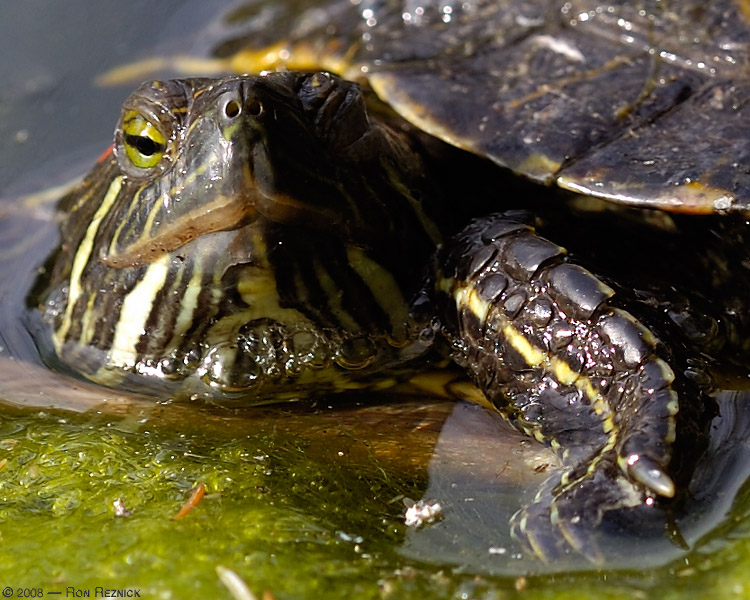
200mm f/4 Micro EDIF-AF (click for photo): The premiere tele-macro lens, this baby is long when you mount the HN-30 hood, but it is extremely well-balanced on the pro-series body. The focusing ring is somewhat stiff (which allows precision movements for fine adjustment, at the expense of a little extra effort). For AF, use the limiter -- it’s a bit slower than the 180mm, and allows focusing to under 2.5 feet. Manual is of course best when you are focusing much under 3 feet, or into trees, etc. Resolution of detail at all focal distances from extreme close-focus to infinity is superb -- up close, the lens is amazing. It has exceptional contrast, resolves a tremendous amount of detail, and is quite controllable, but when you get inside about 1:3 or so (roughly 3 feet), it requires enough light to keep the shutter speed well up at the desired aperture, or a support device must be used. On a tripod, the 200 Micro yields truly superior macro shots. It costs an arm and at least half a leg... but it’s worth it for the tremendous results. The lens is very good at all apertures between f/4 and f/11, but it is best used at wider apertures only at longer range or with a subject that requires maximum isolation at shorter range... f/8 to f/11 provides best results at very close range. I use it as both a field lens and macro lens. The fly macro above and the closeup of the Red Slider below were both from the 200 Micro.
|
|||||||||||||
|
|
|||||||||||||
|
200mm f/2 AFS/VR: This short stubby beast of a lens is the fastest focusing telephoto around. It has the ability to shoot in nearly any light (due to the maximum aperture of f/2). It shoots cleanly at any aperture from f/2 to f/8, and can track the fastest moving subjects with ease. It exhibits an exquisite defocused character (similar to the 85mm f/1.4D) at wider apertures, allowing for an exceptional degree of subject isolation. The only downsides to this lens are the cost (fairly high) and the weight, although it is balanced so well that you can shoot it handheld fairly easily. I once shot it handheld for hours at a time, shooting puffins in flight, but my arms were very tired afterwards. The enormous smile on my face made up for it though... this is a great lens. It also works exceptionally well with the TC-14e and TC-17e teleconverters for 280mm and 340mm. The shot below was from the 200/2 with 1.7x TC (340mm at f/8):
The image below, cropped 1:1 from a portrait of a Wattled Crane, was taken with the 200mm AFS/VR
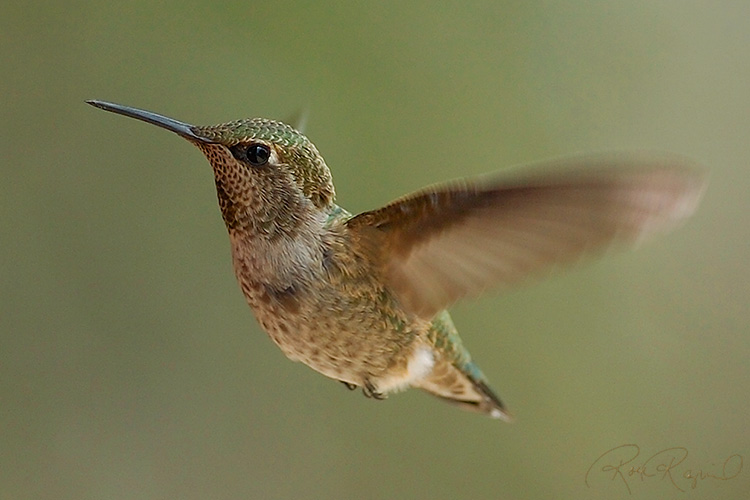
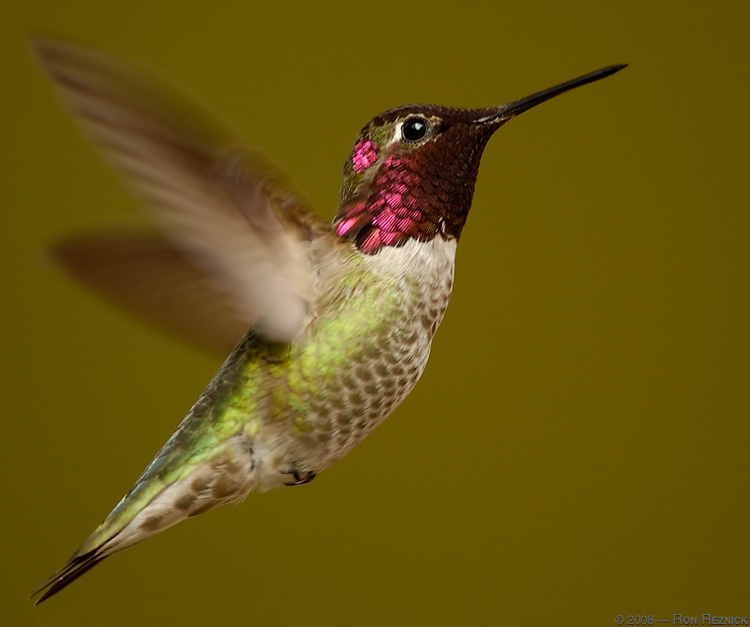
300mm f/4 AFS (click for photo): With its AFS motor, this lens locks on the subject quickly and tracks with precision. At 3lbs., it is not light, but it is capable of being used hand-held (I always do) and is a superb lens for action and other situations where rapid acquisition and tracking is necessary (e.g. catching a hummingbird in flight). It is a little soft at f/4, but stopping down to f/5.6 offers excellent performance (and the loss of detail at f/4 is so slight that I have no qualms about shooting the lens wide open). Excellent contrast, smooth defocused areas (9-bladed aperture), and it focuses down to 4.75 feet for some truly amazing closeups. In combination with the TC-14e teleconverter, you have a 420mm f/5.6 lens with the AFS motor intact, and it is usable at f/5.6, although stopping down to f/8 gets the best performance out of the combination . The 300/4 has the A/M-M focusing switch, so you can do manual override with AF enabled for the best of both techniques. A fantastic lens... the only thing wrong with it is the tripod collar (which flexes), but by wedging minicell foam or another brace between the lens body and the top of the tripod mount (or acquiring the Kirk Photo aftermarket tripod collar) that problem can be gotten around. 300mm f/2.8 AFS-II (click for photo): The 300mm f/2.8 AFS-II is a magnesium-shelled version of Nikon’s venerable design. This version has a reduced minimum focusing distance (down to 7.5ft. from 10ft., 7.2ft. when using MF) and a reduction in weight from 6.8 lbs. to 5.6 lbs. The AF system is extremely fast and sure, acquiring a lock very rapidly and silently and tracking with precision even when the subject is moving quickly towards the camera. The defocused character is exquisite, esp. with water in the background, and transistions to the blurred region are very smooth. It operates extremely well with the TC-14e teleconverter to yield a fast-focusing 420mm f/4 with exceptionally beautiful character. The lens can be shot wide open with top-grade results, and exhibits very high contrast and finely-detailed line definition. This lens, while difficult for me to shoot hand-held, is an absolute dream to use when mounted on a Wimberly Sidekick. It is an expensive and large lens, but the results it returns are well worth the effort required to carry it into the field. Very highly recommended, but only available used (replaced by the AFS/VR described below). 300mm f/2.8 AFS/VR: An upgrade to the AFS-II, with VR and the newer coatings. The difference is that this lens can be handheld much more easily with less impact on the yield, and the contrast is higher when shooting into the sun. I’d say that it is well worth the extra cost because the VR is also very useful when shooting at dusk or early in the morning when shutter speeds are low, but if you already have the superb AFS -II and these benefits are not required for your shooting style, I’d say that you may want to stick with the AFS-II as performance is otherwise quite similar. Personally, I never regretted the switch as my yield went up.
500mm f/4 AFS-II (click for photo): One of Nikon’s three super-telephoto lenses, this beast of a lens is about the same size as the 300mm f/2.8 AFS-II with the hood in shooting position… before you put the 500mm lens hood on. It’s big, but it’s smaller and lighter than it’s more expensive two brothers: the 400mm f/2.8 and 600mm f/4 AFS-II lenses. It’s far easier to handle in the field as it weighs only two pounds more than the 300mm f/2.8 AFS-II. It focuses quite fast, between 16 feet and infinity, resolves detail extremely well even wide open, and has beautiful defocused character. Like the 300mm, it works very well with the TC-14e and Sidekick, and is a fabulous lens (discontinued (available used) and replaced with the 500mm f/4 AFS/VR). — Ron Reznick — Return to Top of Page Return to Kit Descriptions
|
|||||||||||||
|
|
|||||||||||||
|
|
|||||||||||||
|
|
|||||||||||||